Doctapaul

Retired: Business & Personal Performance Coach, Author, Researcher, Speaker, Energy Healer and Singer.
Homepage: http://paulcburr.com
Health = Mind and Body at Ease. Not-Health = Dis-ease (extract from Defrag your Soul).
Posted in Healing, Personal, Self Development on January 16, 2013
Let me start by announcing:
- I have no medical qualifications whatsoever.
- Before you make any decision about your health, you should seek advice from an appropriately qualified health practitioner.

My interest in the mind-body connection to physical well-being really took off in 2006 when attending an Introduction to Meta-Medicine® course facilitated by Susanne Billander[1]. I submitted myself to and delivered (under supervision) basic therapy sessions. I found out first hand that there was something to the relationship between mind, body and the environment we live in.
Photo from The University of the West of England site.
Thousands of client case studies of the ‘mind-body connection’ causes of ill health have been researched. The links between significant emotional events (singular points in time triggered by a traumatic or near-traumatic experience) and the diseases that can ensue as a result are well established. The International Meta-Medicine Association®[2] (IMMA) now offers training and certification as an Integrative Health Consultant in mind-body healing. Integrative Medicine is still not regarded seriously by many of the mainstream scientific, medical authorities, healthcare and pharmaceutical industries. Interest is growing though, thanks to people like Rob Van Overbruggen (author of The Healing Psyche), Susanne Billander (author of The Secret of Cancer and Other Diseases), Dawson Church (author of The Genie in your Genes), and Bruce Lipton (author of The Biology of Belief).
Professor João Magueijo[3] writes how science has an “argumentative tradition” and “has no shortage of very clever people who love to show off”. In fairness, Professor Magueijo extols how such an environment has merits. It increases the rigour and diligence by which new science sets out to prove its worth. But… (and this is a deliberate but)
There exists a conflict of interest, especially a financial interest, between Allopathic (conventional) and Integrative (alternative) Medicine. One cannot help but suspect that ‘very clever people’ (scientists, marketers and politicians) are using their talent to defend against, if not attack, Integrative Medicine – and corner the supply of herbal remedies to the public in the UK. In the name of ‘science’, they seek to protect and expand the financial and illusionary sacrosanct ‘turf’ of multi-billion dollar industries in pharmacy and healthcare.
Meta-Medicine®, in my mind, is now a well grounded science.
The nub of the scientific research reveals that all disease is linked to significant emotional events in our lives. The onset of every disease is preceded by an unexpected, unwanted, deeply upsetting event.
Put another way, the ontology of this research implies that all disease (= dis-ease) begins in the mind – which means: to heal we first need to put our minds at ease, i.e. we must change our interpretation of the significant emotional event that we attracted before the onset of our disease.
In practise we are often unwilling to talk about significant emotional events or the symptoms of the disease.
- The event may be so traumatic that we refuse to acknowledge it. We literally blot it out from our conscious thinking or, at very least, we refuse to talk about it.
- We may feel shame about the event. It weakens or destroys a self image that we dearly wish to hold on to, and project on to others.
- We may feel shame about the ‘weakness’ we would reveal by talking openly about our malady. We feel embarrassed. We don’t wish to be seen as a second class citizen.
- We may fear the consequences of being told that we have a serious health condition. We fear possible ‘future fear’. We fear a possibility that we don’t want to happen. We ignore early symptoms. We stick our head in the sand, metaphorically speaking, and hope the symptoms go away.
- We may even lack the self worth needed to call out for help. We may feel we don’t deserve others’ attention. We don’t want those that we love and care about to worry about us. We place their emotional wellbeing before our own.
- We may be in a Machiavellian environment (for example, in corporate business or politics) where problems translate into weakness. Where there lurk many, envious of our power, who will seize the opportunity to brings us down, and hopefully gain our power.
If there is one piece of wisdom to counteract all the above, it’s this:
Love and care for yourself wholly so that you can love and care for others wholly too. You cannot give to others that which you do not give to yourself first.
(Continued in Defrag your Soul)
/|\
Paul C Burr
Follow @paulburr
[1] Susanne Billander, META-Medicine® Master Trainer, META-Health Coach, Master Practitioner of NLP, Time Based Technique, Vortex Healing®, Soulrealignment® ref: http://www.metamedicine.se/
[3] Faster than the Speed of Light, by João Magueijo, cosmologist and professor in Theoretical Physics at Imperial College London. He is a pioneer of the varying speed of light (VSL) theory.
The Early Years, 0-14: Kidding Is No Joke (extract from Defrag your Soul)
Posted in Healing, Life's Changes, Love, Personal, Pitfalls I've Fallen Into, Relationships, Self Development on January 13, 2013

Courtesy of Social Literacy Today
Kids take in everything. Only recently have I discovered the extent to which parents influence their children’s whole lives, way beyond the age they leave home. Kids accept and live the Law of Attraction with full accountability and responsibility.
A child seeks love, security, warmth and touch. When a child receives not love, not security, not warmth or not touch, that child accepts full responsibility for not receiving what they want. Furthermore, it blames itself for having neither the physical nor the intellectual strength to deal with untoward behaviour in a mature adult fashion. It doesn’t know how to channel the negative emotions (shame, anger, sadness or fear) that arise within. How could it?
The child feels helpless about how to cope and so locks away the negative emotions in a shield or ‘bubble-wrap’ of etheric energy. The child develops compensatory behaviours (e.g. remaining silent, denying/blocking negative thoughts about others, blaming self) that shield its conscious mind from the negative emotions hidden within its shadows.
This is not a mature decision and it’s not exclusive to children. How well do we adults react in such situations? Ask yourself, “How often do I…
- …hide my hurt or sadness to avoid confrontation?”
- …resort to anger to get what I want?”
- …manipulate someone emotionally to get what I want?”
- …use brute force to get my way?”
- …harbour ill feeling?”
None of the five strategies are mature acts, I suggest. Let us look at Strategy 1 because that is how many people I know deal with confrontation to begin with. Many adults, including me, when faced with controversy, let things be and say nothing. We either do not have, or choose not to employ, an effective strategy to deal with unwanted or inappropriate behaviour. Instead, we remain silent. We hope the issue will die down, go away and all will be forgotten in time. Let us not confuse weak with meek.
- When weak, you put yourself second, you subsume yourself to someone else with disregard for your own feelings. You place their feelings above your own and you hide behind a veil but the negativity lingers. You feel shame from not speaking or being your truth. You feel shame because you choose not the courage to be meek.
 Meek, I suggest, is putting your honour on an equal status with those around you. You do not need to use brute force to get your point of view across. You do not resort to conflict, anger or threatening behaviour. You do not manipulate or seek to instil anger, sadness, fear or shame in others either. Instead you seek to put your point across constructively, positively and truthfully – so that others understand the impression they make on you. Your seek parity, not to win outright. You speak or act according to your truth. You choose courage to be meek.
Picture courtesy of Doves and Serpents.
If we act ‘not-meekly’, i.e. weakly, how can we expect children, to whom we set an example, to choose courage? Furthermore, kids not only take in every conscious thing that’s going on around them, they take in all the untold, unsaid things as well. They absorb, at a subliminal level, all the endemic family moods, trouble and strife. They register the negative vibrations from their environment and store the information in their Etheric Body (a blog about the Etheric Body will follow). They/we develop compensatory behaviours; one or more of the five strategies cited earlier to cope.
Kids blame themselves for all the feelings of insecurity they endure. They make themselves fully accountable and responsible for the untoward behaviour of their parents, for instance. They convince themselves that they caused it and therefore they blame themselves accordingly. (The very morning of writing this paragraph, a lady who had suffered child abuse appeared on the BBC1 TV morning show. She described the complexity and paradox of how a child can still love a parent who abuses them.)
In her wonderful and insightful book, Your Secret Self,[1] Tracy Marks explains the subtle logic of this childhood dynamic. If the child were to blame their parents for untoward behaviour and place themselves as completely innocent (which they are) without the intellectual or physical ability (which they do not have) to change their environment; they, in effect, relinquish all power (to change things) and hope for their lives.
On the other hand, if they consider their untoward parents or carers to be normal loving people and blame themselves for everything that happens – then at least they give themselves hope. They give themselves the ability to ‘rectify’ themselves in the hope that their parents will show the love and security they seek.
Faced with a no -win situation, the child blames themself, wraps away the negative emotions in their subconscious mind and develops compensatory behaviours. They hide their feelings away. In denial, they pretend that all is okay with their parents. But they can withdraw from wanting or expecting love. Their self worth plummets.
A damaging behavioural subroutine sets in. It can stay with the unloved, insecure child into their adult lives. In their adolescent years they may well seek escape. Their susceptibility to drug addiction and, in extreme cases, self harming increases.
Shine on…!
/|\
Paul C Burr
Follow @paulburr
[1] Ref: Your Secret Self, by Tracy Marks, Part Three, The Psychodynamics of Twelfth House Conflicts and Part Four, The Process of Integration: Twelfth House Liberation.
The Jigsaw Puzzle of Life
Posted in book, Personal, Pitfalls I've Fallen Into, Self Development on January 10, 2013

Photo puzzle showing Patrauti church, UNESCO World Heritage Site, Suceava, Bucovina, Romania
I remember my (Great-) Aunty Rita from my young childhood days. She loved gargantuan jigsaw puzzles. Aunty Rita taught my Cousin Mike and I how to start by sifting out and connecting together all the pieces that had straight edges, to establish the boundary of some 1000+ piece puzzle. It would typically be a huge landscape with many decorative features and often a lot of blue sky.
Having completed the edge, we knew that every remaining piece fitted inside its boundary. We weren’t allowed to step outside. With the rules established, we’d next tackle any large feature, say a building, which stood out from the background. If it was a grey building, for example, we’d hunt for pieces that had what looked like the outline of the building running through them – a straight edge with grey one side and background the other. We’d piece them together and then search for and insert further grey pieces, some with bits of a door or window in them. Eventually, when the building was complete, we’d feel proud that we had a discernible part of the jigsaw to show for our work.
Slowly, we’d work through all the features of the jigsaw; piecing togther their outlines first and then filling them in. This strategy, by and large, seemed to work fine until…
Picture courtesy of Roberson, Small Business Consulting.
Blue Sky, Nothing but Blue Sky (extract from my 3rd book, Defrag your Soul)
When faced with blue sky, our ‘fill-in-the-outline-first’ strategy, to complete the picture, no longer worked. We had to revert to visual trial and error. We didn’t have the nous to get a ‘feel’ for where each piece slotted correctly, the first time around. We’d pick up a piece that looked the right shape and test it one way then the other. Sometimes we’d see if the piece in our hand fitted in a number of vacant slots.
On occasion, we’d try and force a piece, which looked very nearly right, into place. When we realised the error of our ways we’d extract it. We needed to be careful because if we removed the offending piece quickly, out of frustration, we would drag up some neighbouring jigsaw pieces with it. We would then have to reconnect the pieces we’d torn from their sockets. We learned to stay cool when things didn’t fit into place the way we wanted them to.
Fitting ‘blue sky’ jigsaw pieces together, proved a good analogy for my trial and error approach to getting my own way as a child. If I gave out a howl when I didn’t get my own way, I soon got to know about it. (I immediately felt the discomfort of trying to insert an ill-fitting jigsaw piece to my ‘blue sky’.) If I tried to force the issue (i.e. the wrong piece in the wrong place), I’d ‘rip out’ any ‘credits for good behaviour’ that I carried at the time.
Hissy fits were not tolerated. I found out at a very young age how to discern between acceptable, polite behaviour and the opposite. I found out what being a ‘good boy’ meant partly through the responses I got when I was ‘naughty’ – and how being a ‘very naughty boy’ could result in a very unpleasant reprimand.
Like many kids I tested the boundaries. How far could I go with ‘naughtiness’? What could I get away with? Where would I find the line not to cross? Where and when did I need to temper my behaviour to get what I want and avoid punishment?
Howling and carping on about things I wanted to happen didn’t work but neither did keeping quiet. How could I let people know what I wanted if I didn’t speak out? So I instinctively learned how to temper my approach to influence others. I learned about temperance.
What about other ‘blue sky’ feelings such as love and security (never mind the shame, anger, sadness and fear that can ensue when we don’t get love and security)?
We hopefully provide our children with love and security. I can think of no happier sight than seeing an innocent child, smiling and living life to the full, knowing that they themself feel completely safe and secure.
This begs questions, When do we set them free to stand on their own feet? How will the child learn about insecurity (not security) and not-love? When do (or could) they start to learn about shame, anger, sadness, fear? How will they cope with trauma?
The answer is, “Do what feels right. They will call these experiences for themselves when the time is right regardless”.
It’s only recently that I’ve realised the dualistic metaphorical jigsaw nature of how you learn about life. For example, to appreciate love, you need to learn what not-love is. Otherwise how could you discern when you love (or are loved by) someone? And to fully understand the term ‘unconditional love’ you need to learn what ‘conditional love’ is.
Furthermore, the picture in the metaphorical jigsaw is not static. It’s a movie that changes with life’s ebb and flow of breath, days, years, relationships and so on. What creates success one day can create a setback another and vice versa.
Times change. People change. Contexts change. Nature demands change. You evolve, if nothing else, to survive. You learn from successes and setbacks. For example, if you consistently show the same anger to different people, you probably won’t get the same response or outcome. You can also find yourself continually fitting a piece of anger to a situation where only patience will fit. There’s ‘a right fitting piece’ to every situation you attract in life but it might require great subtlety, instinct or sensitivity to find it – for there are many pieces to choose from.
Life’s Jigsaw has an infinite number of pieces. It evolves into a lifelong movie that you get to act in and direct (sometimes partly and sometimes wholly) for yourself. And the most challenging parts to act and direct tend to be the ‘blue sky’ pieces.
So the art or perhaps science of life is how to reduce the trials and errors that can cause upset and piece together its ‘blue sky’ pieces more efficiently. How do you respond to those situations that happen to us all and only a few know how to handle effectively – the ‘blue sky’ pieces – the known unknowns?
Knowing you don’t know is learning in itself. It is the first step up from not knowing what you don’t know or unconscious incompetence, life’s starting place. Training professionals call this first step, conscious (of) incompetence. Through practice, experience and ideally having a role model to copy, you can become consciously competent, i.e. you know what to do but you have to think about it. For example, when I was learning to drive I was told to change gear every 10mph. So I used to know which gear I should be in by reading the speed gauge consciously.
Eventually, you get a feel for what needs to be done. You attend to what’s needed intuitively. This state is called unconscious competence. You do what’s needed without thinking about it.
Through experience and maturity you hopefully learn how to piece together ‘blue sky’ pieces to Life’s Jigsaw – such as love, decision making, patience or coping with trauma. What about when you attempt to go beyond the puzzle’s edge? Here you find the unknown unknowns – for example, buried emotions or childhood pacts you made with yourself that you didn’t know you carried around with you. Here you find yourself back where you started life, unconscious incompetence.
(To be continued…)
Shine on…!
/|\
Paul C Burr
Follow @paulburr
Temperance
Posted in Healing, Life's Changes, Love, Personal, Pitfalls I've Fallen Into, Self Development, Soundbytes of Wisdom on December 19, 2012

…does not mean ‘do without or prohibit’.
It means balance.
Temperance: Major Arcana card no 14, from the Ancient Tarot Deck of Marseilles by Jean Dodal, 1718.
Remove balance in life and you limit your perspective. The workaholic might not give themselves the time to enjoy a healthy personal life. The addict can’t see outside the control of their habit. The drunkard inebriates themselves from sobriety. In all three cases, the protagonist lives their life in denial.
Should you avoid temperance, not only do you limit your learning, you can do yourself harm – physically, mentally, emotionally and spiritually. As such, you harm the environment you live in and those nearest and dearest to you. Lack of temperance, by definition, means an excess of, or gluttony for, one thing over another. Be it work, alcohol, drugs, mindless TV or computer games – the excess means that you deny yourself health, which has consequences.
Have you ever watched downhill tobogganing on TV? The more often a sleigh hits the wall, the more it slows down through friction. And when it bounces off sideways the team are using their energy laterally to get back on track. Whilst it’s traversing it has to travel farther than a direct descent down the middle of the run. The middle way is the fastest and smoothest.
Study the Temperance card, from the 18th Century, Ancient Tarot Deck of Marseilles, by Jean Dodal. You observe a grounded female angel clad evenly in red (fire, hot, male) and blue (water, cool, female). Her arms are dressed in red, to signify strength and power of Mars. Her blue covered torso signifies the love and beauty of Venus. Water from the higher cup flows into and cleanses that of the lower. Not a drop is spilt or wasted; the flow is steady and harmonious. Her wings reveal she is an angel who may advise, guide and protect us. Her work embraces the harmony of opposites.
The Angel of Temperance teaches us that life’s direction leads eventually to the middle path. We do not need to swing extremely and continually between feast and famine, peace and war, love and hate, mercy and severity, prosperity and poverty, abundance and scarcity, riches and debt, victory and defeat, mine and yours, property and theft. When we embrace both aspects of duality as one, we create oneness. Something is only good for one, when it is good for all. There is no us and them, there is no me without not me. There is only us, together we become oneness.
When we bring temperance into our lives, we exemplify oneness.
(extract from my forthcoming book, from Defrag your Soul, due out next week.)
Shine on…!
/|\
Paul C Burr
Follow @paulburr
2012 – The Return to Oneness
Posted in Astrology, Current Affairs & The Economy, Healing, Life's Changes, Love, Personal, Pitfalls I've Fallen Into, Poetry, Quirky Ideas, Relationships, Self Development, Soundbytes of Wisdom, Visions and Dreams on December 1, 2012
 The Return
“Enough! I’ve had enough of winning and losing.
I can only exert a limited amount of power.
I can only spend a limited amount of money.
I can only create so much suffering before I kill off those over whom I am victorious.
I can only suffer so much when I lose.
I have exhausted all the possibilities of winning and losing in the material world.
I now choose temperance.
I return to the harmony of opposites, the yin and yang, the will and imagination, to return to oneness.”
Defrag your Soul: audio recording of talk about parts of the this forthcoming book, due for publication Summer 2012
Posted in book, Healing, Life's Changes, Love, Personal, Pitfalls I've Fallen Into, Self Development, Soundbytes of Wisdom, Training & Development, Visions and Dreams on May 14, 2012
 Click here: DEFRAG YOUR SOUL
Transform your Consciousness:
a practical guide for the beginner and seasoned traveller within…
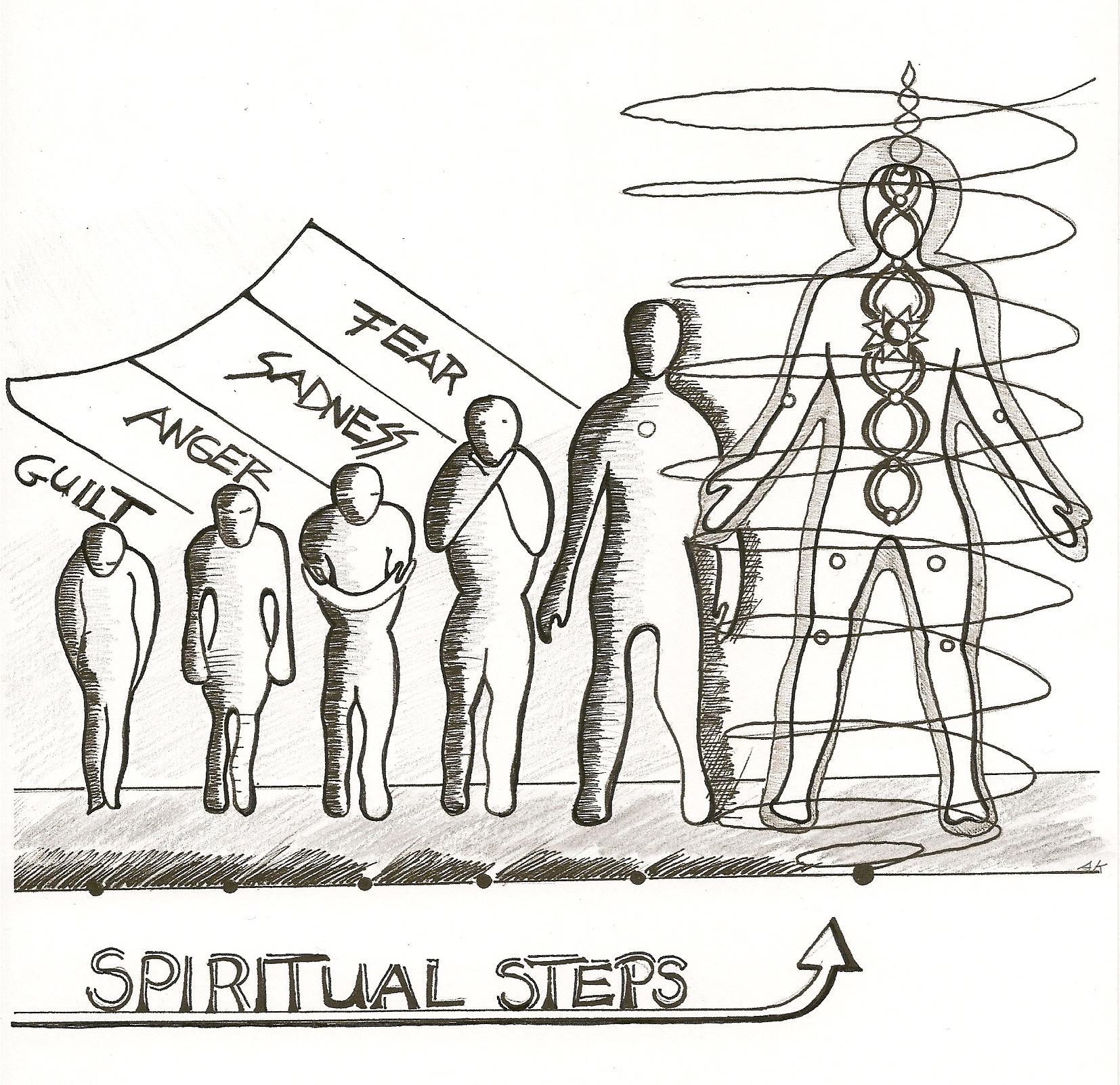
Illustration by Andrea Kurucz, selected as part of a gallery of drawings for Defrag your Soul.
Extended extract from a talk I gave to the National Federation of Spiritual Healers, on Saturday 12 May 2012, in central London. The talk contains some topics from my book, Defrag your Soul, due for publication in Summer of 2012.
Parts of the talk include:
- Beyond NLP
- What is your purpose in life?
- Duality
- How do you take spiritual steps on your journey within? How do you know you’ve taken them?
- The Etheric Body aka The Vital Body
- The links between the Etheric Body and Health
- The path to magic
Shine on…!
/|\
Paul C Burr
Follow @paulburr
Your Inner Child Has a Message…..
Posted in book, Healing, Life's Changes, Love, Personal, Pitfalls I've Fallen Into, Poetry, Relationships, Self Development, Soundbytes of Wisdom, Visions and Dreams on April 11, 2012
By listening carefully to the voice of your inner child, you develop your intuition. You tune into its messages. Call it “intunition.” At the same time, you become aware of the feeling when you veer away from the child’s advice. You detune. You cease to trust yourself.
Self trust is the “engine oil” to give and receive the very best, to and from the world around you. Not-self trust means you give and receive second best at best. You undervalue yourself and your immense power.
Extract from my forthcoming book, 2012: A Twist in the Tale, that I intend to serialise on its own blogsite. Watch this space.
Image sourced from Abused Empowered Survive Thrive
Shine on…!
/|\
Paul C Burr
Follow @paulburr
The Alchemy of Life: from Low Self Worth to Self Worth
Posted in Healing, Life's Changes, Love, Personal, Pitfalls I've Fallen Into, Relationships, Self Development, Soundbytes of Wisdom on March 13, 2012
When you filter out, ignore or deny feelings of low self worth, you filter out self worth as well. Remember, the “wet and dry” of life. You can’t know one without the other. So life is about knowing self worth and its shadow, low-self worth. When you understand both and how to transmute the shadow into light, then you understand the alchemy of life.
Image sourced from Spagyric Arts
Shine on…!
/|\
Paul C Burr
Follow @paulburr
Love your Bubble of Fear
Posted in book, Healing, Life's Changes, Love, Personal, Pitfalls I've Fallen Into, Poetry, Relationships, Self Development, Soundbytes of Wisdom, Visions and Dreams on March 1, 2012
 Allow your fear into your consciousness. Place it in a bubble. Neither attempt to hold the bubble nor prod it. Let the bubble float freely. Surround the bubble skin with love. Be patient. Wait for love’s miraculous power of osmosis to weave its magic. The fear will wave farewell.
Image sourced from Fine Art America
Shine on…!
/|\
Paul C Burr
Follow @paulburr
The Law of Reversibility – the What and How – more Powerful than the Law of Attraction
Posted in Healing, Life's Changes, Love, Personal, Pitfalls I've Fallen Into, Relationships, Self Development, Soundbytes of Wisdom on February 28, 2012
An extract from
Defrag your Soul

- Image from http://exper.3drecursions.com/
The Law of Reversibility
If situations (events and people) can affect your emotional state, then inducing that same emotional state will manifest the same events and people into your life. Manifesting is not attracting. It’s creating something that’s already there, should you really want it. It requires focus, imagination and faith – in yourself.
(But you also need to know clearly what you are manifesting.)
About the Law of Duality
To know love, for example, you need to know not-love. So learning not-love serves a purpose. You are indirectly learning about love. And you won’t experience love wholly until you complete your learning. Here lies the rub of duality. This is how life works.
So…
Be clear that what you imagine will bring you what your soul seeks. And know that all the things that you experience – that you don’t want – serve a purpose.
The Law of Reversibility is far more powerful than the Law of Attraction. Rather than attract what you don’t have, you know you can have exactly what you want. It already exists in the field of unlimited possibilities. Manifesting requires practice, faith and imagination. Try it.
Imagination – takes place in your mind. It means place an image-in-ions (atoms). Your conscious mind passes the information (your emotional state) pertaining to that image to your unconscious mind. The unconscious mind then signals your DNA to send out the corresponding vibe to the universe.
DNA – is your transmitter to the universe. It transmits your signal of how you are feeling in the moment – your vibe. Its signal is governed by your unconscious mind.
Unconscious mind – passes the decisions made by the conscious mind to each and every body cell in your body. It also collects the vibes you pick up unknowingly and stores that information away too. It protects you from information that it feels you cannot cope with. All the information, good and bad, is stored away in your holographic Etheric Body. Each and every body cell is a fractal (the whole is contained in each fractal) of your Etheric Body’s hologram.
Body cell – Each and every body cell contains your whole life history, your memories, feelings, reactions and actions, everything that’s happened to you knowingly and unknowingly. It is placed in cellular memory.
Vibe – is the vibration that your DNA sends out to the universe. You can increase the power of this vibe by acting as if you already have what you seek.
Act as if – The brain executes the same neural pathways in the same way, whether you’re viewing real life situations or dreaming about them. The mind cannot tell the difference between the real world and an imaginary world. By acting as if you already have what you want in your imagination – you fool the mind into thinking the same. The conscious mind thus directs the unconscious mind to inform your DNA to send out a corresponding vibe. Over time, you attract what you want, as long as you keep faith in yourself and live your dream.
Soul – The body cells that constitute your physical body, inform your soul of the direction you seek to take. The soul cross references your intentions and behaviours with its quest – your life purpose. Soul then signals, via the mind, spirit to inform it of the new experiences it seeks to attract.
Spirit – is the force which manifests form: people things and events, to take you down your chosen life’s path, to your true self, your soul’s quest. But spirit can only manifest via the mind. The decision as to what to manifest is taken by the mind. The mind contains four things that sully spirit’s power to attract what your soul wants: guilt, anger, sadness and fear – the four seeds of karma.
Karma – you invoke a karmic response when you veer from the path of your chosen life’s journey. Karma tells you that you are allowing guilt, anger, sadness and fear to cloud your decisions; that you have gone astray.
False ego – is the keeper of guilt, anger, sadness and fear. It’s has a dual edged sword type of existence. It holds on to these negative emotions and attempts to control your mind with them. But also, it knows full and well that its purpose is to reveal the source of these negative emotions to you when the time is right – so that you can release them. In a paradoxical way, your false ego beckons your light. It knows when to submit to your light to shine within in its dark shadows. Each time you shine more light into your false ego’s shadows, you take a spiritual step on your chosen life’s journey – toward your true self.
Spiritual steps – are what you take when you allow and release all the guilt, anger, sadness and fear in your life that stops you from taking that step. Each step takes you closer to your true self.
True self – the purpose of your life is to find, open, become and express your true self. If you don’t know it already, you find the purpose of your life by following your passions. Once you find out what your purpose is, you open up it up to understand the implications it holds for you. Becoming your true self takes time. You have to find and open each spiritual step on the way. As you take each step, you become closer to your true self. You gain wisdom. You complete that step when you apply that wisdom to serve humankind. You shine. You express more of your true self – a deathless solar star.
Shine on…!
/|\
Paul C Burr
Follow @paulburr
Posted in Uncategorized on February 27, 2012


It is counterintuitive to think that your greatest breakthroughs and insights come from your dark side, fears and insecurities. Normal ways of thinking suggest to ignore, suppress and deny your inner darkness. Thoughts of anger, jealousy, hate, fear, worry, anxiety, sadness and the like are avoided in everyday life. But doing this leads to even more pain, amplified negative feelings and eventually can cause your body to get sick or experience dis-ease.
From my experience I’ve found that there is actually a wealth of knowledge, insight and information contained within the dark sides of my personality. Upon further inquiry I’ve been able to see the root of my anger, fear, frustration, jealousy, etc. and then identify it, put a name on it and start to work with it.
For example, I have found that when I am jealous, it is only because I am focused on what someone else has…
View original post 237 more words
Neither Feed nor Fight Fear
Posted in Healing, Life's Changes, Love, Personal, Pitfalls I've Fallen Into, Relationships, Self Development, Soundbytes of Wisdom on February 23, 2012
 Spirit doesn’t work through intellect. Spirit affects feelings that pass through the mind to be interpreted and experienced. If the conscious mind is receptive to these feelings, you feel good, you can become high spirited. Your conscious mind passes the feeling of goodness to your unconscious mind – which despatches signals to your DNA to expand and increase their vibration. Your DNA rejoices. You send out a good vibe to the universe.
Image sourced from Scrape TV
When the feelings despatched by spirit touch a “nerve,” a fear, your mind becomes unreceptive. This fear passes straight down into your unconscious mind, on to your DNA, which sends out a negative vibe to the universe. It wasn’t spirit that sent you a negative feeling, it was your mind that transmuted spirit’s signal into fear. Spirit can’t force you to choose courage instead of fear. It tells you. You intuit what spirit says. Your intuition might prompt you to choose courage – but your conscious mind has power of veto. So listen to spirit carefully.
When your intuition tells you to, choose courage. And when you’re completely honest with yourself, your heart will create boundaries to protect you. Choose the courage to allow fear into your conscious psyche. Neither feed nor fight that fear. Acknowledge it and let it be. Your unconscious mind has then no negative signals to send to your DNA.
Allow fear space. Let it be. Fear that is neither fed nor fought gets “bored eventually – and leaves. Spirit rewards courage and honesty with protection.
The learning process, to allow fear space, is subtle. Fear’s subsequent release is even more subtle. It’s not an intellectual process. But once you have experienced a release, you’ll know what I’m talking about.
Sometimes your fear might be unconscious. In which case go get professional help to unearth it. Find out what it is, where it came from, how you got it, who gave it you – and the impact it’s had on the decisions you make in life. And when you find out…..
Let your fear be. Take your time. Tread one step at a time with spirit. There’s a temptation to rush ahead; fill in the blanks to missing wisdom with fantasy; join dots that aren’t meant to be connected. Tread carefully, honestly, courageously and diligently. Find your truth.
Shine on…!
/|\
Paul C Burr
Follow @paulburr
Character Defines the Results You Attract
Posted in Astrology, Healing, Leadership, Life's Changes, Love, Personal, Relationships, Self Development, Selling, Soundbytes of Wisdom on February 22, 2012
“…all that happens is the result of character, the only manner in which the destiny can be changed is to change the character….. the chart of birth….is merely a map of character…..(and) can be markedly altered in any direction desired.”
CC Zain[1]
Image sourced from Spencer Hope Davis

[1] Ref: Chapter 4, Doctrine of Nativities from the book, Laws of Occultism, Inner Plane Theory and the Fundamentals of Psychic Phenomena by CC Zain, published by the Church of Light.
Shine on…!
/|\
Paul C Burr
Follow @paulburr
Soul (Play-) Mates
Posted in Healing, Love, Personal, Relationships, Self Development, Soundbytes of Wisdom on February 20, 2012
 Soul-mate relationships tend not to be easy. Two people come together because they share the same dark shadows within their psyches. They serve one another by shining light into each other’s shadows. They come together to accelerate one another’s consciousness development, faster than each would on their own.
Image sourced from Personality Cafe
Such a bipartite arrangement sounds like a good thing – and it is. But it can come in the form of conflict and upsets, especially if either partner allows their false ego to dominate the relationship. Discussions about hurt and anger can descend into blame and accusation. The couple need to stay in control of their emotions and keep a detached view of what’s going on. They can find harmony consciously by[1]:
- Recognising the sparks of attraction that first brought them both together – and the value that each brings to “one-another’s table.”
- Being clear about the spiritual nature of their relationship.
- Recognising that both share similar dark shadows within their psyche.
- Acknowledging and showing gratitude for things they give one another.
- Agreeing consciously, up front, the spiritual purpose of the relationship – as well as its physical, intellectual and emotional aspects.
- Bringing complete truth to the table. Both partners acknowledge the sources of all:
- Joy and happiness that propel their own Life’s Journey and
- Guilt, anger, sadness and fears by which they hold themselves back. There will be unconscious truths, memories and negative emotions too. They’re the reason the couple came together in the first place. When the couple first met, their souls recognised the struggle that one another were having. Their souls made a pact – and perhaps each one’s inner child recognised and wanted a new playmate. They chose to become soul playmates in the game of life.
- As time evolves, each speak about feelings openly rather than dwell on the events which cause upsets. They go back to the source of each upset and retrace their steps in the wisdom of hindsight, outside the clutches of the unconscious mind.
Like all couples, soul mates can have great fun, and/or settle down and have families, and/or share the same passions, hobbies and intellectual interests, and/or engage in fantastic sex, and/or enjoy a healthy level of independence – like “two strings of a lute,” in tune:
“As the strings of a lute are apart though they quiver the same music.”
They can learn to live together in harmony – physically, intellectually, emotionally and spiritually. Each secure in the wisdom of the purpose of their relationship; in tune with one another. Neither soul mate needing to trust because both share complete truth; a beautiful relationship, fuelled by love.
Shine on…!
/|\
Paul C Burr
Follow @paulburr
[1] I am unashamedly going to give another plug. If you want to learn more about how relationships come together, survive and thrive, through truth, please refer to my first book, Learn to Love and Be Loved in Return.
Posted in Uncategorized on February 17, 2012
I don’t have words good enough to describe how wisely simple TotalTrinity’s blogs are. They have a profound uplifting effect on me.
That you TT /|\

Love does not withhold, it does not play games, it does not need to be right.
Love is a constant flow of giving and receiving. It is not enough to love yourself.
Loving yourself is an important and vital first step, but loving yourself alone will eventually lead to plain old narcissism.
For love to be complete it’s gotta be shared. For love to be complete it’s gotta be given and received.
There are a lot of people out there who say “I’m doin’ me”, or “I’m just lovin’ myself” and I say congratulations! But here’s a warning: Don’t love yourself only; if you do, you will wither and die a spiritual death.
Sometimes, loving yourself can be a wall to hide behind the willingness to be vulnerable. Love requires vulnerability to flow. Without vulnerability, love cannot grow and love cannot flow.
It takes a…
View original post 127 more words
Posted in Uncategorized on February 17, 2012
There are SUPER frustrating times on The Path. Instead of fighting against frustrating times with more frustration, anger and resentment, take a higher road today.
Remember, a delay is not a denial. The world’s timing is always perfect and if something isn’t quite manifesting yet, there is a reason. So, today, instead of choosing to be angry, hurt or just plain ‘ol pissed off, take a BIG DEEP BREATH and know that everything is happening in perfect time. It might piss you off to know that it’s not happening in YOUR time, but it is happening in the perfect time.
Do what you can do that’s within your power today and let go of the rest. There’s no use letting the things you can’t control dictate your level of happiness.

So, instead of choosing frustration because you think you won’t be provided for or taken care of, choose to see…
View original post 115 more words
Non-duality is Indivisible
Posted in Healing, Pitfalls I've Fallen Into, Self Development, Soundbytes of Wisdom, Visions and Dreams on February 15, 2012
 The harmony of opposites, the balance between the duality of light and dark for example, does not create non- duality. Harmony creates unity. Non-duality possesses harmony, balance and unity but it is none of these things, or anything. Conceptually, and I am at my conceptual limit when I write this, non-duality is an infinitely higher vibration or dimension. Non-duality is indivisible.
In the same way, unconditional love has neither attachment nor detachment. It has no conditions. It is indivisible.
Image sourced from Enlightened Spirituality
Shine on…!
/|\
Paul C Burr
Follow @paulburr
The Original Meaning of Valentine’s Day
Posted in Healing, Life's Changes, Love, Personal, Poetry, Self Development, Soundbytes of Wisdom, Training & Development, Uncategorized, Visions and Dreams on February 14, 2012
The ancients celebrated Valentine’s Day to acknowledge the wakening of the seed in hu-man. Deep within the ground, unable to see the light (above the surface) ahead, surrounded in darkness, the seed commits to its journey to the light of summer.

Image sourced from totaltrinity.wordpress.com
Valentine’s Day
Only Arthur, borne of truth,
Could release the sword from the stone.
Find your truth, release light into your darkness.
Glory lies in the once-shadows now lit.
/|\
Commit to your journey;
to break through the surface.
Allow your past to drop away.
Focus ahead, now.
Truth beckons.
/|\
Declare your intent!
Love, for Arthur.
Love, for God.
Love, the journey.
Love, the Light.
Shine on…!
/|\
Paul C Burr
Follow @paulburr
The Law of Consequence
Posted in Healing, Life's Changes, Personal, Pitfalls I've Fallen Into, Self Development, Soundbytes of Wisdom, Visions and Dreams on February 12, 2012
When you choose not to shine light into the shadows within your psyche, you attract people and situations that mirror those shadows. They point, to help you return, to the spiral path your soul seeks.
The path lies in front of you always. Look for it.
When you look and the time is right, your inner seer will speak.
Listen.
The seer speaks from the stillness, deep down, within your body, not your mind.
Choose courage. Heed the words.
Give them the acid test for surety.
Do they uplift your, and others’, consciousness?
If so, act upon the words given.
If not, avoid; tis’ your false ego fobbing you.
Ponder.
You already possess the answer to every question you ask.
Tune in.
Image sourced from tompagano

Shine on…!
/|\
Paul C Burr
Follow @paulburr
The Heart Doesn’t Judge
Posted in Healing, Life's Changes, Love, Personal, Pitfalls I've Fallen Into, Relationships, Self Development, Soundbytes of Wisdom on February 7, 2012
Image sourced from bl1tz.wordpress.com/
Do not analyse the effect of what happens to you.
Instead, be aware. Remain non-judgemental. You awaken to the cause of the effect.
Shine on…!
/|\
Paul C Burr
Follow @paulburr

Share this page


How to Be a Friend of the Devil Within

Available from Amazon and major bookstores:
Quick Guide VII – A Top-notch, Sales-Relationships, Account Management Template

Available from Amazon and major bookstores:
Quick Guide VI – How to Sell Coaching

Available from Amazon and major bookstores:
For The Love of Lilith & How to Put Love into Practice (and Non-attach Yourself to It)

Available from Amazon and major bookstores:
Quick Guide V – How to Apply Mindfulness to Business Relationships

Available from Amazon and major bookstores:
The Mystique to the Game of Life (and Unrequited Love)

Available from Amazon and major bookstores:
Quick Guide IV – A Scorecard that Accounts for Mindfulness in Business

Available from Amazon and major bookstores:
Quick Guide III – How to Bridge the Pillars of Successful Business Relationships

Available from Amazon and major bookstores:
Quick Guide II: How to Spot, Mimic and Become a Top Salesperson

Available from Amazon and major bookstores:
Quick Guide: How Top Salespeople Sell
Available from Amazon and major bookstores:
Defrag your Soul

2012: a twist in the tail

Available from Amazon and major bookstores:
Learn to Love and Be Loved in Return
Available in USA and UK, in paperback and Kindle format
 ,
, 
 ,
,  &
& 
 &
& 
 ,
,
 &
&
 also
also
 ,
,  also
also
 ,
, also
also
 ,
, 


 Paul C Burr