Posts Tagged law of attraction
Soul (Play-) Mates
Posted by Doctapaul in Healing, Love, Personal, Relationships, Self Development, Soundbytes of Wisdom on February 20, 2012
 Soul-mate relationships tend not to be easy. Two people come together because they share the same dark shadows within their psyches. They serve one another by shining light into each other’s shadows. They come together to accelerate one another’s consciousness development, faster than each would on their own.
Image sourced from Personality Cafe
Such a bipartite arrangement sounds like a good thing – and it is. But it can come in the form of conflict and upsets, especially if either partner allows their false ego to dominate the relationship. Discussions about hurt and anger can descend into blame and accusation. The couple need to stay in control of their emotions and keep a detached view of what’s going on. They can find harmony consciously by[1]:
- Recognising the sparks of attraction that first brought them both together – and the value that each brings to “one-another’s table.”
- Being clear about the spiritual nature of their relationship.
- Recognising that both share similar dark shadows within their psyche.
- Acknowledging and showing gratitude for things they give one another.
- Agreeing consciously, up front, the spiritual purpose of the relationship – as well as its physical, intellectual and emotional aspects.
- Bringing complete truth to the table. Both partners acknowledge the sources of all:
- Joy and happiness that propel their own Life’s Journey and
- Guilt, anger, sadness and fears by which they hold themselves back. There will be unconscious truths, memories and negative emotions too. They’re the reason the couple came together in the first place. When the couple first met, their souls recognised the struggle that one another were having. Their souls made a pact – and perhaps each one’s inner child recognised and wanted a new playmate. They chose to become soul playmates in the game of life.
- As time evolves, each speak about feelings openly rather than dwell on the events which cause upsets. They go back to the source of each upset and retrace their steps in the wisdom of hindsight, outside the clutches of the unconscious mind.
Like all couples, soul mates can have great fun, and/or settle down and have families, and/or share the same passions, hobbies and intellectual interests, and/or engage in fantastic sex, and/or enjoy a healthy level of independence – like “two strings of a lute,” in tune:
“As the strings of a lute are apart though they quiver the same music.”
They can learn to live together in harmony – physically, intellectually, emotionally and spiritually. Each secure in the wisdom of the purpose of their relationship; in tune with one another. Neither soul mate needing to trust because both share complete truth; a beautiful relationship, fuelled by love.
Shine on…!
/|\
Paul C Burr
Follow @paulburr
[1] I am unashamedly going to give another plug. If you want to learn more about how relationships come together, survive and thrive, through truth, please refer to my first book, Learn to Love and Be Loved in Return.
Non-duality is Indivisible
Posted by Doctapaul in Healing, Pitfalls I've Fallen Into, Self Development, Soundbytes of Wisdom, Visions and Dreams on February 15, 2012
 The harmony of opposites, the balance between the duality of light and dark for example, does not create non- duality. Harmony creates unity. Non-duality possesses harmony, balance and unity but it is none of these things, or anything. Conceptually, and I am at my conceptual limit when I write this, non-duality is an infinitely higher vibration or dimension. Non-duality is indivisible.
In the same way, unconditional love has neither attachment nor detachment. It has no conditions. It is indivisible.
Image sourced from Enlightened Spirituality
Shine on…!
/|\
Paul C Burr
Follow @paulburr
The Original Meaning of Valentine’s Day
Posted by Doctapaul in Healing, Life's Changes, Love, Personal, Poetry, Self Development, Soundbytes of Wisdom, Training & Development, Uncategorized, Visions and Dreams on February 14, 2012
The ancients celebrated Valentine’s Day to acknowledge the wakening of the seed in hu-man. Deep within the ground, unable to see the light (above the surface) ahead, surrounded in darkness, the seed commits to its journey to the light of summer.

Image sourced from totaltrinity.wordpress.com
Valentine’s Day
Only Arthur, borne of truth,
Could release the sword from the stone.
Find your truth, release light into your darkness.
Glory lies in the once-shadows now lit.
/|\
Commit to your journey;
to break through the surface.
Allow your past to drop away.
Focus ahead, now.
Truth beckons.
/|\
Declare your intent!
Love, for Arthur.
Love, for God.
Love, the journey.
Love, the Light.
Shine on…!
/|\
Paul C Burr
Follow @paulburr
The Law of Consequence
Posted by Doctapaul in Healing, Life's Changes, Personal, Pitfalls I've Fallen Into, Self Development, Soundbytes of Wisdom, Visions and Dreams on February 12, 2012
When you choose not to shine light into the shadows within your psyche, you attract people and situations that mirror those shadows. They point, to help you return, to the spiral path your soul seeks.
The path lies in front of you always. Look for it.
When you look and the time is right, your inner seer will speak.
Listen.
The seer speaks from the stillness, deep down, within your body, not your mind.
Choose courage. Heed the words.
Give them the acid test for surety.
Do they uplift your, and others’, consciousness?
If so, act upon the words given.
If not, avoid; tis’ your false ego fobbing you.
Ponder.
You already possess the answer to every question you ask.
Tune in.
Image sourced from tompagano

Shine on…!
/|\
Paul C Burr
Follow @paulburr
The Heart Doesn’t Judge
Posted by Doctapaul in Healing, Life's Changes, Love, Personal, Pitfalls I've Fallen Into, Relationships, Self Development, Soundbytes of Wisdom on February 7, 2012

Image sourced from bl1tz.wordpress.com/
Do not analyse the effect of what happens to you.
Instead, be aware. Remain non-judgemental. You awaken to the cause of the effect.
Shine on…!
/|\
Paul C Burr
Follow @paulburr
About Unconditional Love……
Posted by Doctapaul in Love, Personal, Pitfalls I've Fallen Into, Relationships, Self Development, Soundbytes of Wisdom on February 6, 2012
Image sourced from Iv313x

Unconditional love has neither attachment nor detachment. If you have either, you place conditions on your love. Unconditional love has passion and composure but it is neither of them. It is a higher vibration.
Shine on…!
/|\
Paul C Burr
Follow @paulburr
Neptune Plunges into Pisces, 2012-2026
Posted by Doctapaul in Astrology, Soundbytes of Wisdom, Visions and Dreams on February 3, 2012
Extract from Defrag your Soul:
Neptune is at its most powerful swimming in waters of Pisces with its fishes. Neptune is the most spiritual planet and the most illusionary at the same time.

Neptune
Image sourced from Templedarkmoon
Pisces is an emotional and dreamy sign – so you can think you are swimming in the seas of fun and good times without realising the sharks of karma – guilt, anger, sadness and fear lurk in the depths below.
They await to see if you swim in truth or fantasy. Do you swim in spirit or false ego? Do you trust in the Divine or manipulate the ethers for your own sensual pleasure, at the expense of others?
The key to success is DISCERNMENT.
Separate
1) that which feels right, to take you down the path to find, open, become and express your true self from….
2) that which the false ego fantasises about or pacifies your fears.
This can be very tricky, especially in affairs that are close to your heart and uncomfortable in the head. But its almost impossible to decipher when you’re split 50/50 between head and heart.
Do I love her? Do I not?
Shall I go for this job? Shall I not?
Am I being true to myself? Am I not? – This is the key question.
Discern between oneness and separateness.
Live with your vulnerabilities. Neither deny or over embrace them. Let them be okay.They/you are human. And….
Trust yourself.
Trust spirit.
Trust the Divine.
Shine on…!
/|\
Paul C Burr
Follow @paulburr
Life’s Jigsaw – Fixety or Infinity
Posted by Doctapaul in Personal, Quirky Ideas, Soundbytes of Wisdom, Visions and Dreams on January 26, 2012
Sourced from askert.com
Existentialism: Life’s jigsaw has an infinite number of pieces, only if we restrict ourselves to adhering to the maxim of infinity.

Shine on…!
/|\
Paul C Burr
Follow @paulburr
Client:-“I Can’t Forgive Myself.” – “You Don’t Need To.”
Posted by Doctapaul in Current Affairs & The Economy, Healing, Life's Changes, Love, Personal, Pitfalls I've Fallen Into, Relationships, Self Development, Soundbytes of Wisdom, Visions and Dreams on January 20, 2012

Image from Oneness, Conscious Choices
There’s no such thing as forgiveness. Humankind is not empowered to forgive. Tis a trick of the mind which stems from the sense of separateness.
Us and Them? = Separateness. (ask Pink Floyd)
When someone else “trespasses against us,” we are encouraged to “forgive them.” When we trespass against others, or even ourselves, we are encouraged to repent and ask for forgiveness.
Which is why we, with good intention, choose to forgive someone else’s, or ask for forgiveness for our own, “wrong doing.” And when we try to forgive ourselves, who is forgiving whom? Do we forgive in our hearts or in our mind?
As without, so within = Oneness.
The heart does not judge. And the soul seeks wisdom, your heart’s desires, not judgement borne of separateness.
The heart only has love, for everyone and everything. The sun shines on us all, regardless of thought or deed. We love unconditionally, like the sun, when we have learned to love ourselves.
Rather than forgive, release the anger, sadness, fear or guilt within you – replace it with passion, to transform yourself first. Raise your vibration. When enough of us focus on oneness, the vibration will spread.
So be uplifting. Transform from separateness to oneness. Journey to Love unconditionally.
And…
Unconditional love leads to magic, divine magic – because you become the change the world awaits.
Shine on…!
/|\
Paul C Burr
Follow @paulburr
Unconscious Attracts…
Posted by Doctapaul in Coaching, Healing, Leadership, Life's Changes, Love, Personal, Pitfalls I've Fallen Into, Quirky Ideas, Relationships, Self Development, Selling, Soundbytes of Wisdom, Training & Development on January 18, 2012
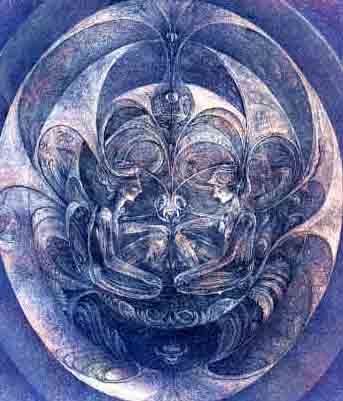 With so many changes in the world around us, tis vital to focus on that which you feel you can control and influence:- namely yourself and those in your immediate sphere.
Image from Crystalinks
You may not be able to influence the chaos but You can control how You respond to it. Feelings of anger, hurt, guilt and fear move from your conscious to your subconscious and then you project them outwards subliminally.
People see your “armoured shield” not the truth within. People are less attracted to an armoured tank than the beauty of love and truth. As a tank, your influence and effective communication is thus limited, if not futile.
So what is this armour? It manifests itself in the form of guilt, anger, sadness but most of all fear. The four seeds of karma. You cannot hide but you can get lost.
If you inebriate yourself from your negative feelings, you are in conscious denial. This does not work.
If you embrace your negative feelings, you restrict yourself from releasing them. For example, you may work long hours and completely commit yourself to avoiding failure. No matter how successful you are at avoiding that which you fear, you never release the fear.
Notice, I say “release the fear,” not “defeat it.” It takes courage to defeat fear, but it takes more courage to release it. Warriors defeat fear, alchemists release it. And in doing so they achieve fearlessness – which is not about bravery; it’s about wisdom.
On the far side of fear lies wisdom.
Release the four seeds of karma (guilt, anger, sadness and fear) and you…..
Shine on…!
/|\
Paul C Burr
Follow @paulburr
Love Saves
Posted by Doctapaul in Love, Poetry, Relationships on January 9, 2012
Love saves.
 Trouble haunts the head not the heart.
I acknowledge my love.
I let it be, unfettered.
I place my trust completely in it.
I let it shine,
Safely in my heart.
As I do you.
Image from the Happy Hippy
Shine on…!
/|\
Paul C Burr
Follow @paulburr
The Return to Oneness
Posted by Doctapaul in Current Affairs & The Economy, Healing, Life's Changes, Personal, Pitfalls I've Fallen Into, Soundbytes of Wisdom, Visions and Dreams on January 6, 2012
 Love is divine. Anything that is not love, is not divine.
- What if God does not judge man?
- What if God empowers man to judge himself?
Imagine, if you will, a world in which all your desires are fulfilled. Everything you want, you are given. You only have visualise its image in ions, that is, use your imagination. The image manifests as strongly, and as often, as you want. You, and everyone else in such a world, can achieve, or choose to strive to achieve, fulfilment. You have the empowerment of choice. Welcome to The Desire World, a stepping stone between heaven and earth.
Mankind does not have the language to describe heaven. We are restricted to the limits, language and syntax of the mind, and its imagination. The Desire World is thus a manifestation of heaven, in terms that the human mind can understand. In it, matter manifests ethereally as if it were real, just like in the world around us, if you can imagine such a paradox?
For instance, imagine you wanted to climb a tall mountain. The climb would be arduous and difficult. Somehow you have just enough strength, endurance, technique and wisdom to make the climb – every time and anytime you want to. Eventually you exhaust all the possible climbs this mountain offers – the steep, the long, the quick and the gentle.
In another instance, you desire a mountain that might or might not exceed your climbing capabilities. You seek a challenge that might take you beyond the limits you set yourself. Let us say that your attempt to climb the mountain fails. You halt and turn back to base camp. Or perhaps you take a tumble and fall. You spend a night in the Desire World’s virtual hospital that you have already created – just in case of such a fall. The next morning you awake, fully repaired and ready for a new climb. For in this Desire World, you do not need insurance. You can protect yourself against all eventualities. You simply go there in your imagination and desire it.
You live a life without fear, hurt, anger or guilt – because everything untoward can be averted or put right with the snap of an imaginary finger. You live a life free from all that is not love. All that exists, in the Desire World, is divine. You live, as close to heaven as you can, on earth. You can choose anything intellectual or recreational you are passionate about, for example, mathematics, crosswords, music, football, sex, stamp collecting or organic farming (to name the first few things that came into my head). The Desire World was created for “part” of you to play in safely.
That “part” of you was, and still is, an archangel archetype. It appreciates fully, the notions of desire and, abundance for all – through a sense of “oneness.” But, as wonderful as this heaven on earth is, it has its limitations. You realise that a challenge, such as the mountain, was not a challenge after all. Because you preset the conditions and safeguards to the climb. You enjoy the fulfilment of your passion unhindered. You climb, not climb or select an unknown result to your climb by choice.
Should you fail in your climb, there is no loss of personal pride through defeat because there is only “oneness” in heaven. Everyone in The Desire World is intrinsically linked to everyone else, through spirit. Everything desired is abundantly available to everyone through their inherent oneness. Until you choose the desire to create an emotion that had not existed before – “separateness.”
The Archangel Michael sought to extend the challenges of the Desire World by desiring separateness with tangible and emotional trophies for victory – and penalties for failure, in the form of physical and emotional pain. Pain required separateness. Because oneness means when one suffers, all suffer.
“What is (not) good for you, is (not) good for everyone.”
Thus Michael created the double bind of separateness and pain. Personal differences in identity and power (but not honour) would evolve between entities. Separateness evolved during the latter phases of, what we call, mankind’s Lemurian Age and early phases of the subsequent Atlantean Age. By desire, separateness of consciousness designed a boundary between the individual and the divine. So God empowered man to create in his own image, with his own imagination, with his own image in ions.
Mankind was empowered to create its own boundaries. It created the walled Garden of Eden, Mother Nature. Mankind empowered itself with the will and imagination to create and destroy but by its own volition, mankind did not empower itself to transgress or destroy nature itself. And God never withdrew mankind’s nous to tear down the garden walls, ask Pink Floyd! J, the ticket price to return from separateness to oneness.
Seperateness means me and not me, you and not you. Mankind experienced duality for the first time. But it did not lose its capacity to experience the harmony of opposites. We create warm water by creating the right mix of hot and cold water that feels temperate to our skin. We enjoy the warmth of the sun by being shielded by nature or clothing from overexposure. Mankind may have developed separateness but it never lost its capacity for temperance. Thus temperance is a stepping stone between separateness and oneness.
Mankind evolved separateness of consciousness and the physical body to house it. Separateness of consciousness gave the individual the choice to experience personal victory at the expense of others – and block out the pain and suffering of others that their victory created.
Winning and losing, victory and defeat, joy and suffering became a personal experience. The notion of winning and losing fostered pride. From pride evolved upset: hurt, fear, anger and, later on (see next paragraph), guilt – the karmic seeds of not love.
As mankind evolved to separateness, it became more and more detached from Love. Self proclaimed political and religious leaders labelled aspects of not-love as sins. They introduced the notion of good and bad. Mankind thus evolved the notion of guilt. Individuals, representing God or the good, would judge others for their good deeds and their sins. Oligarchs would get man to feel bad about himself, which is the first step we use to control one another’s minds. And when we control someone’s mind, we disempower them. This is not God’s way, of right divine, of love.
Your works and your devotion, faithfulness,
Your drudgery and patience under stress,
And that your final deeds shall far outshine
The first ones, when you rule by right divine.
From The Message to the Hierarchy of Helios, the sun king and regent of the fourth chakra, the heart.
In the beginning Love resided at the heart of everything, at the core, or coeur. The core of every human is love. The core of our solar system, the sun, is love. The sun shines its light on everything and everyone, regardless of race, colour, creed, species, belief system or behaviour. The light of our truth is there to be seen unless we choose to shield our eyes from it. We receive light, or love, everyday. But we do not all accept it. those who do not choose not love.
Not love has no place in the heart (whichmay i remind you, judges not; it empowers). Instead mankind evolved the brain, the data processing centre for the mind, which became the domicile of personal joy and suffering – and the willingness to allow others to suffer through one’s petty personal desires.
Mankind’s personal desires to achieve and be victorious over one another evolved in the head. But here lies the rub. Victory, be it a football game or a world war brings short lived self gratification and, by contrast, long term suffering. The victor’s pride and sense of achievement dwindles.
Mankind creates trophies to preserve the pride of victory, and stores them on a shelf in a cabinet, in a trophy room. Visit Manchester United or Liverpool football clubs. They have many such trophies. But they are all history or past tense. They personify a phrase I used to hear in IBM Sales Mangement meetings, “you are only as good as your next sale – or game, in football speak.”
The meaning and power of a trophy, like any fresh food in a greengrocer shop, has a shelf life. We yearn to keep that sense of achievement and pride but we cannot. We want that feeling of victory and pride again. So we return to theatre of football or war to regain it.
We attempt to make the past tense present by winning another trophy. If we do not. our pride suffers. We get upset. So much so, we may seek revenge to regain our lost pride.
We see such wars today, based on the false ideals of right, wrong and of divine retribution, where both sides claim “God is on our side.” The victors store their trophies in the form of land, people and large private bank accounts stored away in remote untraceable bank vaults. We want more. We fight more.
And through repeated violence a minority of us has developed a lust for killing. Such is the nature of the physical world we have evolved. Such is the nature of separateness of consciousness without oneness.
By desire and design, separateness always has winners and losers until – as happened in the Desire World – mankind says
“Enough! I’ve had enough of winning and losing.
I can only exert a limited amount of power.
I can only spend a limited amount of money.
I can only create so much suffering before I kill off those over whom I am victorious.
I can only suffer so much when I lose.
I have exhausted all the possibilities of winning and losing in the Physical World.
I now choose temperance.
I return to the harmony of opposites, the yin and yang, the will and imagination, to return to The Desire World.”
Mankind arrives at the end of the game. The time has come to gather all the pieces, the money, the cards and board of play – and put them all back in the box from whence they came. Mankind passes the game on to the next species who seek to play with it.
And this is where mankind finds itself today, at its endgame. It has two choices:
- Destroy itself
- Collect and organise all the pieces of ourselves to go back to oneness, only wiser, much wiser. Because we fully appreciate oneness for what it is, not separateness.
We are either at the beginning of the end, or the end of the beginning – the never, or return to, forever.
We can choose heaven on earth.
Shine on…!
/|\
Paul C Burr
Follow @paulburr
John Lennon, 9 October 1940 – 8 December 1980
Posted by Doctapaul in Current Affairs & The Economy, Leadership, Love, Personal, Soundbytes of Wisdom, Visions and Dreams on December 8, 2011

The Law of Attraction: Heaven on Earth
Posted by Doctapaul in Healing, Life's Changes, Personal, Pitfalls I've Fallen Into, Self Development, Soundbytes of Wisdom, Uncategorized, Visions and Dreams on November 27, 2011
A learned friend sent me a message that coincided spookily with an experience I’d had during the night before. Her message read,
“If we do not desire something or feel a pleasant emotion about it, we do not strive to make it happen.
Passion is your power for manifestation.”
A lot of my friend’s messages arrive when I need her wisdom most. Here’s what happened the night before.
Before I went to sleep I pleaded with spirit that I’d had enough of my desire loops. I sought help. I wanted guidance because whatever I was doing wasn’t working. I fell into a deep sleep but not for long.
I entered into a dreamworld of turmoil and darkness, inside a huge complex ethereal machine. Cogs and wheels ground away but all seemed to work against one another. Parts kept stuttering and jamming. Then they would attempt to reverse out of gear to get going again – like the inside of a huge faulty printer trying to unjam itself. The machine had almost had almost ground to a halt, almost but not completely. I awoke.

Picture sourced from manbehindthecurtain
An archangel helped me. We spoke of my desires and delineated those which belong to the upper echelons, of my desire world, from the lower. She asked me to focus on that which I really wanted in my heart of hearts. At the same time she asked me to focus on all the anger, sadness, fear and guilt I associated with NOT having what I desired.
She taught me to raise, up to spirit, all the anger, sadness, fear and guilt for one particular yearning I craved for. I became aware that releasing fear came with a consequence. I would be obliged to choose courage. mmm!?!
Nonetheless I completed her instruction. But then came the surprise. She instructed me to now raise my desire to spirit and let that go too. I paused whilst I realised that releasing desire to spirit, especially the desire for something so important to me, wasn’t easy. I had wanted that wish to come true badly.
The angel waited patiently whist I dwelt on the realisation that spirit manifests form. “Aha!” I thought. I awakened to the logic of my angel’s instruction. Spirit can only manifest a desire I own if I give it up to spirit. If I hold on to it, I offer spirit nothing to work on.
For the first time in my life I now understood, in my heart, Gandhi’s words: “ A burning passion coupled with absolute detachment is the key to all success. ”
I raised my palms upward above my head and raised my heart’s desire to spirit. I said it forcefully. Just in case I added the phrase, rather amateurishly, “and I really mean it!” I wanted to demonstrate my commitment to my words.
I released my desire with all the heart I could muster. I realised suddenly how my desires had dominated my erstwhile thought world. Prior, when I yearned, or felt fearful about not receiving what I yearn for, I was in a future dream world. When I became angry, sad or felt I must be unworthy, about not getting what I yearn for, I’d been living a past memory. I’d spent little time in the present tense, the here and now, the path on which life takes place.
My passion for life was being held back. My friend’s message made me realise some words of ancient wisdom I’d pondered upon for years.
“In order to journey the path, you must develop a passion for the path (life), not your destination. You become the path.”
I thanked both my magical friends – for the abundance I’d been blessed with – two angels, one in spirit form, one in human form.
They’d taught me the secret ways of heaven on earth.
The Law of Attraction Cannot Avoid the Law of Consequence
Posted by Doctapaul in Healing, Life's Changes, Personal, Pitfalls I've Fallen Into, Self Development, Soundbytes of Wisdom on November 23, 2011

Avebury
“I, me, not me, us, we attract everything that happens to us, every change, happy and sad. There is no such thing as random.
Life is more than the pursuit of happiness. It’s about learning wholeness. We seek to find, become and express our true selves and thus find true happiness, from within, not without.
The more we know about ourselves, warts and all, the greater the wisdom we have to achieve what we set out to achieve. When we choose courage and willpower to act on that wisdom, the closer to true happiness we become.
So life is about a continuum of choices.
And life is about becoming.
It’s a very tough climb, at times.
Seek wisdom!”
Shine on…!
/|\
Paul C Burr
Follow @paulburr
When our will and wishes become one
Posted by Doctapaul in Astrology, Personal, Pitfalls I've Fallen Into, Self Development, Soundbytes of Wisdom, Uncategorized, Visions and Dreams on October 25, 2011
If you were to ask yourself “In my heart of hearts, my very soul, what do I seek more than anything else in life?” Would you really know the answer? After years I’m still getting some semblance.
I had to evolve a very focused state to answer the question without my emotions, petty desires and false-ego getting in the way. Even then, I would question myself “Do I really mean this?” And when the answer is “yes,” there arrives a second question, “Do I have the will to go for it?”
Knowing what you want is one thing. Going for it, 100%, is another. It takes determination, resilience and above all courage.
“Courage is a decision, not a trait. We all have it. We don’t all choose it.”
We need to focus on the here and now, in the present tense, and choose courage.
The point, the present tense, no matter how short a space in time, is infinitely small. As soon as we’ve thought of “it,” an infinite number of moments have already passed by. “It”, is/was already the past tense. What if we were to experience “it” right now? No thought, only now, (an) eternity (of moment by moments), when the mind stills completely. We vibrate.
We project our latent desires and fears (desires to avoid things) out into the universe. We broadcast our vibration. We make our own law of attraction. We attempt to attract that which we wish for. But who is that makes the wish? Is it the real “I”? Or is it a supplication of the false ego, “me?”
Is it some external trophy: a partner, money, a job, health or safety from harm, I attach a state of increased happiness to? Will what I seek truly complete me? Or will its energy be subsumed by the unlit darkness of the shadows that lurks within? Is it to fill a dark void I feel inside myself, with the light of a false sun?
Or is my desire to find and become my true self and fulfil my contract (if I were to know it) for this life, in harmony or resonant with all that exists?
This, I suggest, is the true art or science of discernment. To discern my truth (that which takes me down the path I’ve contracted to follow) from false-egotistical fantasy.
When we will ourselves to take the path to our truth, passionately and genuinely, the universe resonates. We attract that which we seek, that which we wish for. Our will and wishes become one. But…
When we seek to placate our false ego, we deviate from our path. We allow the shadows to remain hidden. The universe responds. It disrupts our flow. It tells us there’s something we’ve chosen not to learn about ourselves. We ignore the glory to be found amongst our shadows. Consider the following symbolism.
 Astrologers, ancient and modern, symbolise the sun in charts as a dot in a circle:
The dot (or point) symbolises the here and right now, the present tense. The universe/infinity is represented by the circle, a never ending stream of cycles in which we return continually to our starting place.
The point in (time) the centre of the circle thus represents the vibrations we send out into the universe. They are a product of all the information we possess (from the past) and its impression on our thoughts, words and deeds to create a better future, our will and our wishes. What returns to us in the future is a product of our will and wishes right now.
 Imagine a pebble tossed into a circular pool, as an expression of what we will to happen. Everything we give birth to, all our thoughts, words spoken and deeds go out to the edge (of infinity) to return to us. On their return they meet the waves we project right now.
When the returning waves are coherent with those outgoing, we observe a series of standing waves. We experience our individual wave formation resonate coherently with the universe. We tune into the greater good.
This is not the end of the journey. It is a major milestone that tells us we’re well on our way. It’s important that we acknowledge ourselves.
Acknowledge = Accept + Congratulate + Reward + Consolidate Learning
We are not all equal in power and spiritual development. But we are all equal in honour. It’s important that we acknowledge our power humbly and we don’t over-laud ourselves. Our false ego reclaims lost darkness when we put ourselves above others who haven’t travelled this far.
Please note, our law for attraction is what we will to attract NOT what we wish to happen. Willpower takes courage. Wishing is a relatively simple task but care needs to be taken that what we wish for suits the passion for our life’s journey.
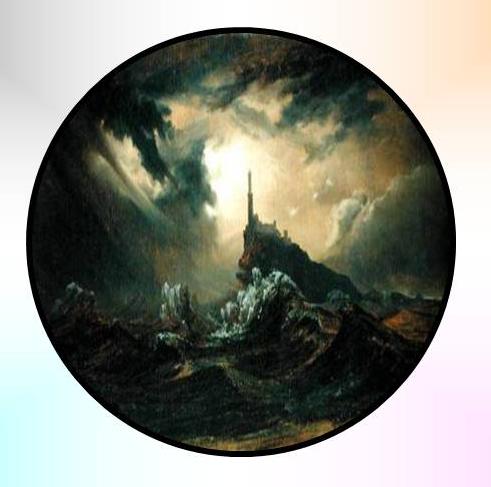 Inserted image sourced from art-prints-on-demand.com
When the returning waves lack coherence, we create choppy waters. In extreme conditions we manifest dark stormy seas. Such is karma. It’s not about right or wrong. It’s feedback that tells us we’ve things to learn from the shadows within us still.
 When the returning waves counter-balance the outgoing waves, the pool becomes still. We become equally knowledgeable with what goes on above the surface (the known world) and below, the unknown. We become one with all that is, non-duality. We live completely in the present tense, outside of time and space.
We discover that the opposite of life is not death, but not-life, an illusion. It doesn’t exist. Birth is the opposite of death. Life is eternal.
Derived from The Power of Now, Eckhart Tolle
Summary:
- Take care and time to focus on that which you really wish for. Make sure it meets the following criteria:
- It is not borne out of anger, sadness, fear or guilt.
- It feels in line with your life’s journey, purpose and contract.
- When it is complete, it will give you a real sense of fulfillment.
- Is it ecological. Does it flow (give to and receive from) with nature and at very least does little harm to its balance.
- You feel passionate about the journey more than the outcome.
- Will yourself to make it happen. Choose courage. Choose providence.
- The universe will provide.
Shine on…!
/|\
Paul C Burr
Follow @paulburr
7 key traits, CEOs use to break through those wretched “Corporate Firewalls”
Posted by Doctapaul in Business, Leadership on August 16, 2011
I’ve seen a wide variety of researched estimates of the average tenure of a CEO. They range from 2.5 to 7+ years. I don’t know many private investors who are that patient. The last two CEOs I met, gave themselves considerably less time to make their mark; 1 year and 6 months respectively.
CEOs seem to have a honeymoon period of around 18 months. By the end of which, if things aren’t significantly better, their ‘marriage’ with the investors will probably not last.
A chat with Professor Colin Coulson Thomas prompted me to write this blog. Colin, author of Winning Companies:Winning People, is Chairman and fellow board member of Cotoco Ltd .
Here are the warning signs that CEOs fear most.
- Bad earnings news: the most likely and quickest sign of departure.
- Corporate programs don’t deliver: mergers and acquisitions “achieve 70% of their potential” at best.
- Failure to turnaround ailing sales quick enough.
- Change takes too long: “Corporate Firewalls” prevent people from getting it done. More on this later.
- Investors don’t understand: a CEO spends 40% of their time articulating strategy and some argue that’s not enough.
- Personal wealth at risk: e.g. missed deadlines can lead to private investors swallowing up the shareholding of a company
- Lack of innovation: playing it safe is no longer an option these days. Competitors and customers are moving too quickly.
- Talent gaps in performance: e.g. 20% of the salesforce bring in 80% of the revenue (and probably a much higher percentage of the profit).
- Conflict in the boardroom: too much time spent looking inwards leaves too little time to focus on the customer.
- Personal credibility at risk: any of the above means less likelihood of stepping up the ladder of success and/or lack of a legacy of note. These in turn can lead to…
- Personal health at risk: where the stressed mind-body connection can have serious consequences. I know of one CEO who, after missing targets set by investors, developed terrible eye problems because he didn’t like what he saw. Another developed disabling back pain through a lack of self esteem. Another who was deemed too rigid and inflexible developed problems with their joints.
Getting the strategy right will largely depend on the advice the CEO receives from those around them and experts (those they know who have done it before). This is called mentorship. And many stop there because it’s traditionally acceptable to have mentors.
But the CEO’s job is not just about getting it right. It’s about influencing people who don’t want to be influenced at first. If they were easily influenceable they’d have done what was needed long ago. This leads us to those constructs that get in the way – I call them….
Corporate Firewalls
With a select group of people, the CEO works out what tomorrow’s reality for their organisation will look like – and the strategy to get there. They find the first firewall just outside this group. Everyone on the inside ‘gets it’. Those on the outside don’t – certainly not the whole picture. Which means they miss perhaps key pieces to the corporate jigsaw. The more select the CEO’s inner group, the higher or tougher the ‘wall’ is to breach.
The wall filters out some of the cognition and understanding of what went on inside. It only takes a small amount to create ambiguity. Once ambiguity kicks it can start a trail as follows:
ambiguity –> confusion –> stress –> dysfunction.
This occurs especially in organisational cultures where ‘not understanding’ is perceived as a weakness. And when a ‘senior middle manager’ (say, from outside the group) doesn’t get it, they tend to do one of 4 things. They…
- Ask for clarity (’tis surprising how little often this happens)
- Put their head down, pay lip-service, and hope it will go away
- Push back (the larger the hierarchy the less egalitarian the culture)
- (Most dangerous of all) Make up the missing pieces of the jigsaw for themselves
The latter habit creates the most confusion for everyone in the value chain right through to the customer interface or the grass roots level of the organisation. For just behind this ‘grass roots’ operational level we observe a second firewall. Curiously, those at the ‘grass roots’ level seem to get the gist of CEO messages quite easily. It’s how those messages are translated into action where the confusion lies. And they are sometimes less prone to keeping quiet when things don’t add up. So the CEO has the challenge of involving those who will carry their message wholly and articulately into the organisation on their behalf.
7 Key Traits
CEOs require a mixed repertoire of personal strategies to influence influencers. In my personal research (of several hundred top performers in organisations around the globe) I’ve observed 7 key traits (or characteristics) in those who influence the best:
- Faith-in-Self – when there is no data (or time to gather it) to make big decisions.
- Passion – if you don’t radiate passion how can you expect others to shine?
- Sensibility – to see where others are at, where they come from and where they are headed, in their minds
- Articulate – to simplify complex concepts and make them compelling
- Curiosity – to explore what’s going on below the surface of things
- Networker – it’s not what you know it’s who you go to, to find and share wisdom to get things done
- Composure – under pressure or facing the unknown
We demonstrate traits. They describe how we come across to others. We do not learn them in a classroom through conventional training. We nurture traits. A good Executive Coach accelerates the process of how a CEO nurtures winning traits and behaviours (that may feel uncomfortable at first) – to forge a strategic personal-identity with those people whom they do not have personal contact with. If these winning traits were purely intellectual or comfortable they wouldn’t need a coach – would they? With this in mind, we can see the difference between mentoring and coaching.
We get what we project.
CEOs get people to copy what they project. The onus they face: to transfer the above traits and characteristics to others. Some CEOs see coaching as something for other people with problems. They are part right. It is. But the problems I talk about are all associated with an inability to influence those people who will block/thwart even the best thought out plans. CEOs might not even know what those that hinder are up to – because they are hidden behind a Corporate Firewall.
Shine on…!
Paul C Burr
Business/Personal Performance Coach & Author
Facebook: Beowulf (>16,000 followers)
Follow @paulburr

Share this page


How to Be a Friend of the Devil Within

Available from Amazon and major bookstores:
Quick Guide VII – A Top-notch, Sales-Relationships, Account Management Template

Available from Amazon and major bookstores:
Quick Guide VI – How to Sell Coaching

Available from Amazon and major bookstores:
For The Love of Lilith & How to Put Love into Practice (and Non-attach Yourself to It)

Available from Amazon and major bookstores:
Quick Guide V – How to Apply Mindfulness to Business Relationships

Available from Amazon and major bookstores:
The Mystique to the Game of Life (and Unrequited Love)

Available from Amazon and major bookstores:
Quick Guide IV – A Scorecard that Accounts for Mindfulness in Business

Available from Amazon and major bookstores:
Quick Guide III – How to Bridge the Pillars of Successful Business Relationships

Available from Amazon and major bookstores:
Quick Guide II: How to Spot, Mimic and Become a Top Salesperson

Available from Amazon and major bookstores:
Quick Guide: How Top Salespeople Sell
Available from Amazon and major bookstores:
Defrag your Soul

2012: a twist in the tail

Available from Amazon and major bookstores:
Learn to Love and Be Loved in Return
Available in USA and UK, in paperback and Kindle format
 ,
, 
 ,
,  &
& 
 &
& 
 ,
,
 &
&
 also
also
 ,
,  also
also
 ,
, also
also
 ,
, 


 Paul C Burr