Posts Tagged tip
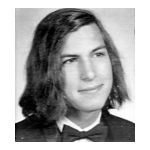
Steve Jobs
Posted by Doctapaul in Business, Coaching, Leadership, Quirky Ideas, Soundbytes of Wisdom, Training & Development on October 6, 2011
Image sourced from realmagic.com
“Innovation has nothing to do with how many R&D dollars you have. When Apple came up with the Mac, IBM was spending at least 100 times more on R&D. It’s not about money. It’s about the people you have, how you’re led, and how much you get it.”
Steve Jobs
Image sourced from
Shine on…!
/|\
Paul C Burr
Follow @paulburr
Replace Forgiveness with Accountability
Posted by Doctapaul in Astrology, Healing, Life's Changes, Love, Personal, Pitfalls I've Fallen Into, Quirky Ideas, Relationships, Self Development, Soundbytes of Wisdom on October 3, 2011
 “Forgiveness is an illusion of the mind. It appeases our false ego. Instead, we are wiser to erase the data that attracted whom, or that which, we resent or feel guilty about. I speak not of erasing an unpleasant memory or the learning there-from. I speak of erasure of the negative emotions we attach to that memory. The same negative emotions or darkness by which we attracted the person or event, that we allowed to offend us, in the first place.
The sun shines on us all, regardless. The Heart Chakra, your 4th chakra, is the domain of Helios, the Sun King. The heart doesn’t judge. Tis all in the mind.”
Image from American Mathematical Society
Shine on…!
/|\
Paul C Burr
Follow @paulburr
Do your Maths, before you speak your mind.
Posted by Doctapaul in Leadership, Relationships, Soundbytes of Wisdom on October 1, 2011
 Being right is one thing.
Being helpful is another.
Make 1+1=3.
Image from Dave Tutin’s site. Dave writes important stuff about USA’s Poltical-Social System as well as many other subjects, close to his heart.
Shine on…!
/|\
Paul C Burr
Follow @paulburr
Hold a grudge, do you?
Posted by Doctapaul in Fun and Laughs, Healing, Life's Changes, Love, Personal, Quirky Ideas, Relationships, Self Development, Soundbytes of Wisdom on September 28, 2011

Sourced from Johnny Hughes on Facebook
Fearless versus “Fearlessness” – the difference between courage and wisdom
Posted by Doctapaul in Coaching, Healing, Leadership, Life's Changes, Love, Personal, Relationships, Self Development, Soundbytes of Wisdom, Training & Development on September 27, 2011
 Should we ignore, or remain in denial about adverse situations or issues, we learn little if anything at all. The situations fester and pester more and more. We feel more pain or hurt. Should we continue to isolate ourselves from our feelings of hurt about what’s going on, we isolate ourselves from love, joy and fulfillment as well. This might need some explanation.
Image sourced from The Hero Construction Company
We can’t learn if something is wet or not if we don’t know what not-wet, i.e. dry, is. Likewise, we are unable to be selective when we detach ourselves from negative emotions. Should we detach ourselves from sadness, we detach ourselves from not sadness, i.e. joy.
I recall when a relationship, I was in, broke up, not too long ago. I took myself to the pub at night, to inebriate myself from the fear and sadness of spending lonely evenings on my own. It took me 9 months before I readied myself to acknowledge the sadness, fear and start to move on life.
So here’s the curious dichotomy: when we ignore or deny fear, we deny not-fear – i.e. courage.
And it takes courage to deal with inner issues. In fact, all issues are inner issues. (When the relationship ended we both had issues to resolve but they were different issues.She had hers. I had mine. They were both proprietary.) The more courage we demonstrate to ourselves to deal with our inner issues the more we learn about them.
And when we learn more about a subject, we become wiser, we become expert and eventually we become a master. Not only are we a master at what’s going on, we become a master over our fears. We don’t hide from, or deny, them. We manage our fears. We control them. We become warriors. We become heroes. To some people, this ends the journey (“Hail, the all conquering hero!”). It does not. It ends a significant part of the journey and starts the next.
When we acknowledge our fear and gain mastery over it – we start to experience the stillness or void from which we base our actions. We start to realise that the issue, we faced, was attracted by and to our fear. We brought the issue, perhaps unknowingly and albeit unwantedly, on ourselves. The issue brought the fear to the surface so that we can erase that fear and evolve to the good.This is a fundamental rule to the game of life. (It might even be the only rule. I’m still working that one out.)
When the fear is fully out in the open in front of us, noone else,we see through it. We wise up to the habits and patterns inside of us that manifest that fear. We realise that those habits and patterns are only habits and patterns – and nothing more. They are not reality but responses we took on, usually in our early childhood, to adverse situations. And when we see their illusory nature, they disappear and so does the fear.
We begin to realise we had nothing to fear in the first place. At this stage we are not fearless, instead we experience fearlessness. We have transmuted our fearless state of mind into fearlessness.
The warrior or hero does not ignore or deny, but manages and controls, their fear. The master or magician, through the wisdom from insight, dissolves fear. Magicians are not brave. They have no need to be. They know fear for what it is – a very real-like illusion.
Fearlessness is a symptom of having achieved a spiritual step on our road to enlightenment. Only two types of people experience fearlessness – masters and fools.
When we become a master at one stage of our journey we instantly become a fool (or totally uninitiated) in the next stage. We become both master and fool at the same time.
We experience the two purposes of fearlessness:
- It tells us we’ve achieved mastery at one level
- It gives us the encouragement to tackle the next stage in our development.
Such is the computer game called “Life” – until we take the last step, of course.
/|\
Shine on…!
Paul C Burr
Follow @paulburr
Happy Friday
Posted by Doctapaul in Fun and Laughs, Visions and Dreams on September 16, 2011
What did the inflatable school teacher say to the inflatable schoolboy, who brought a drawing pin into the inflatable school?
 Image courtesy of BBC
“You let me down. You let the school down. But worst of all, you let yourself down.”
Have a great weekend! 🙂
Ω
Shine on…!
Paul C Burr
Follow @paulburr
About loneliness….
Posted by Doctapaul in book, Healing, Life's Changes, Love, Personal, Relationships, Self Development, Soundbytes of Wisdom on August 26, 2011
Loneliness is something we feel when we are not happy with our own company.
Image by Said, Delta Papyrus Centre

Ω
Shine on…!
Paul C Burr
Follow @paulburr
ps Focus on the image of the Pharoah Ankh-n-aton.
- Do you notice. like me, how the image seems to switch from left to right?
- Do you notice that image is looking at you? Cool huh?
A New “Business-Consciousness” Model for the World
Posted by Doctapaul in Astrology, Business, Current Affairs & The Economy, Leadership, Life's Changes, Quirky Ideas, Visions and Dreams on August 25, 2011
 I started advertising my Facebook page, Beowulf, earlier this week, at only 1p/click-through. It’s aimed at sharing wisdom and research into business, leadership and consciousness – and hopefully attracting some business for me too :).
(Image from Just Give Me Peace who share/sell great art and poetry.)
It accumulated more than 660 followers in 24 hours. It now has over 1000. I expected take-up to be a slow burner, maybe 30-60 people in the first week. Instead, take-up has blown me away. I still don’t know why so many started following it. Will those of you, already signed up, please send me or share your reasons for following Beowulf and your interests? Thank you.
In return I shall write about what you are interested in, best I can.
I would like to discuss something that I’ve been working through in my mind for a couple of years. I haven’t thought it all through. Therefore I write of idealism – which you can, should the more clever than me of you want to, rip to shreds.
We live in a world where land, property and wealth is won through forfeiture. Some kill in the name of a religion or a God, egged on by clerics who say “you shall become martyrs”. Forget it. That is a religion based on brain washing, protectionism and Middle -Age theocracy that preys on the fears of man. The Sun shines on everyman regardless of race, colour, religion or creed. Whether you believe in God or not – can we not all accept the principle? “We are all equal in honour not privilege.”
We see industrial giants, under the guise of “democracy”, scrambling for oil rights in Libya, pipelines across Afghanistan and trade in the Middle East. We spend billions on war, space travel and litigation. We see 1 billion people in the world without adequate food, shelter and clean water. We see violent uprisings (now in London, where next?) where people on the street say “Enough!”
There is a quickening of change. I don’t yet know what shape it will take. Those who attempt to hold on to that which serves only themselves will meet their “come up-pance”. And the “me too” or “me first now” attitude of the developing economies (after centuries of exploitation, want their “rightful share”) will only replace one capitalist empire with another.
Let’s work together to create an abundant business world where wisdom is created and shared. So that those who work hard but do not share the success of those at the top, can learn and raise the value they bring to the market.
If we all focus on helping those who need wisdom most, we raise the wisdom of the whole business planet. At the same time, if we isolate/patent wisdom to line our own pockets, then we transgress the laws of nature.
I speak not of communism versus capitalism but of freedom of wisdom and a change in mindset, so that we sign up to conduct business for the benefit of all. This, I am told, is the essence of the Aquarian Age.
An age based on raised:
- inner experience + scientific reasoning = wisdom + knowledge
- …………………………………………….. = consciousness(to replace out-dated faiths and beliefs)
Raising the world’s consciousness is no easy task. But we can make a start – with ourselves.
I would like your input and feedback please.
Ω
Shine on…!
Paul C Burr
Follow @paulburr
Tip for the day: Complain or Inspire, we choose.
Posted by Doctapaul in Healing, Poetry, Self Development, Soundbytes of Wisdom on August 23, 2011
 When I complain a lot I tend to attract even more things to complain about.
The secret? Park all complaints. The Heart never judges. Focus, instead, on what you’re passionate about; that which inspires creativity.
“The Lodges all shall know that I am he.
Who searches loins and hearts to oversee,
All works creative and all works that find,
Treasures of knowledge in the Cosmic Mind.”
– from The Message to the Hierarchy of Helios, The Sun Regent, on the awakening of the Heart Chakra.
Ω
Shine on…!
Paul C Burr
Follow @paulburr
Fear Attracts Fear – Case Study
Posted by Doctapaul in Business, Coaching, Healing, Personal, Self Development, Selling, Training & Development on August 19, 2011

I coached an experienced salesperson who had fallen on hard times. Sales were down.
Like all good salespeople, he worked extra hard, and made as many sales calls as he could. He crossed all the t’s and dotted all the i’s in abundant call reports, to demonstrate his commitment and loyalty to his bosses. Alas, all to no avail.
Image from How Stuff Works
Like most of us (I include myself) it was easy to blame the economy………………
I asked what was driving him. Back came the response “Well I’m behind in my numbers and I want to catch up. I don’t want to lose my job!”
I asked a series of questions:
Q: “So fear drives your actions?”
A:“Yeh, I’ve got a wife and kids to support” came the answer.
Q: “To what extent do your friends and colleagues share your fear?”
A:“Quite a few, it’s time like this you find out who your friends are.”
Q: “To what extent do your existing customers share in your fear?”
A: “Yeh, a few have intimated that I’m trying too hard and come across as more pushy than usual. They are a bit apprehensive about me.”
Q: “And what of new customers and prospects?”
A: “Yes again, everybody I meet seems fearful to do anything right now, even when the business case is clear cut.”
So what’s going on here? I’ve coached many people in this predicament. Here’s what I’ve seen, time and again.
What drives us, we attract. Fear attracts fear.
So in the above client’s case, the coaching focused on tools to switch out fear and replace it with what the client wanted instead: “creative confidence”.
Within weeks, despite an ailing economy, the client’s sales figures went from poor, to fair, to good, to very good. He got back on track.
Ω
Shine on…!
Paul C Burr
Follow @paulburr
More Sales from Less Waste.
Posted by Doctapaul in Business, Leadership, Marketing, Selling, Training & Development on August 19, 2011
I saw a definition of the word creativity recently. It went something like “linking two things together for the first time”.
I got a message from Edward de Bono. He encouraged me, to think of creativity as more than selling new things, into a new market, incurring risk (against the grain of the current economic climate). But better still to use creativity to perhaps minimise risk and cut costs. This got me thinking.
“How might we minimise risk, cut costs and increase sales?”
I proceeded to think about the role the various functions or departments play in large corporations. What is it that Marketing, Training and Development, Sales Operations (sometimes called Sales Enablement) do? What do they all try to achieve?
A simple answer could be to get a decision-making customer (the information they need) to make a favourable decision.
Each department looks out from their pigeonhole and does their bit in getting the customer’s favourable decision. The more enlightened departments work in harmony to achieve the same end. Alas, this is a rarity…..
….. because most people still look at the function of their work inside-out….. “What outputs do I create, in accord with my job specification?” For example: a flyer, a campaign, a training event. What they often don’t do is measure the ultimate goal: favourable customer decisions. Instead of looking outside-in, they look inside-out. So the sum of the parts is never the whole.
So how would it be if we merged departments: Sales Training and Development, Marketing and Sales Operations/Enablement?
How about if we created a single department called: “Getting Favourable Decisions”.
(Or something less obvious, like “Customer Enablement” for those organisations whose culture has not yet migrated to the Aquarian Age of meaningful information.)
There is an old phrase: “50% of our marketing is valuable and 50% is waste. The trouble is, which 50% is which?”
Luckily for me, I got to analyse a vast amount of data. The utilisation data of a large global IT company’s marketing materials, deposited into a single digital repository. It tracks which materials are used, by whom, where, when, and for how long. The statement “50% waste” proved to be an understatement. The data revealed it was 85%, i.e. only 15% of the material was read by anybody outside marketing i.e. sales and customers.
Likewise I’ve spoken to many sales trainers about knowledge retention. They typically reckon that when people walk away from a training course, they retain 15% of the knowledge and wisdom imparted. That’s about the going rate.
So curiously enough this number 85% crops up again. 85% of the marketing material isn’t being used, 85% of the wisdom imparted is not being retained.
So how about creating a “zero-retention” application? An application that provides on-the-job information, wisdom, knowledge, learning, call it what you will. It gives you what you want, where you want it, when you want it. It’s concise, understandable, and is already customer ready. (No more time consuming training courses, no more pedantry e-learning.)
We merge, into one repository, all the materials we need, to give customers the right information, in the right sequence, to make a favourable decision. We provide this through one single department. We merge Sales Training & Development, Marketing and Sales Operations/Enablement into one. We reduce management overheads, courses and waste (by 85%?).
Your customers and salespeople engage using (the same) articulate materials, media, dialogues, analyses, questions and messages. They all sing from the same song sheet.
Sales go up. Selling cycles shorten. More sales from less waste.
p.s. Now you know what to do. Should you want to know more on how? Get in touch :).
Ω
Shine on…!
Paul C Burr
Follow @paulburr
You Inner Darkness Beckons your Light
Posted by Doctapaul in Healing, Personal, Self Development, Soundbytes of Wisdom, Visions and Dreams on August 18, 2011
 That part of you; the darkness in your psyche; it fills the gap between your personality and True Self. Many people mistake this darkness as something to fear.
Fear not, it beckons your light. Its unseen map, once illumined, shows you the way to your complete self.
It differs from your inner teacher and inner child. Its direct messages pull no punches. It sometimes can transmit its messages without words – you experience an instantaneous download of resources and programming. You may not articulate ably these resources given you. Nonetheless, you receive them. You experience them for yourself. You know. You have no need to explain them to anyone else.
We are blinded when we look at noon day sun. At night, when no clouds (emotions) block our view, we can see infinity.
The glory lies in the darkness. Tis there we find the path to our True Self and purpose in life.
Darkness, thus, serves a purpose in our lives. A purpose equally as important as The Light. Neither embrace your darkness nor deny it. Avoid trying to control it. That will make you into a false sun that rules, and is ultimately ruled ,by fear (not Love).
Instead shine your Light (Love) into it unconditionally. Ask for, but expect nothing, to receive everything.
Ω
Shine on…!
Paul C Burr
Follow @paulburr
4 Warning Signs that Tell You “You’re not ready!”
Posted by Doctapaul in Business, Healing, Leadership, Life's Changes, Personal, Relationships, Self Development, Training & Development on August 18, 2011

x 4
Can you recall a time when you set off on a venture and ignored or didn’t spot early warning signs that things were probably not going to go to plan? Those things are much easier to see in hindsight when “the milk has been spilt.” At the outset, our emotional attachment to the outcome is high. Those emotions however can cloud our vision of what’s possibly about to go awry. We head down the path to disappointment. We can avoid the path to disappointment and setback, when we can read the “road-signs”.
Four warning signs that point to pending setback and disappointment (in a relationship, in business, in everyday life):
- You get upset easily; means your pride is hurt. When you get emotional quickly and easily, you give your power to those you get upset with. You are clouded with emotion. You cannot see out what to do. Others cannot see in. You isolate yourself.
- Less power leads to low self esteem. You don’t feel good about yourself. This leads to fear.
- Fear of further upset and isolation: in extreme cases you despair and turn to others and do their bidding – in order to maintain some form of connection. This is not love or friendship. It is….
- Mind control: someone else has you under their thumb. This is not love. It’s manipulation. You have no way out, until you find the courage to get out from under.
So we can start by acknowledging our vulnerabilities. Which means neither embrace or deny them. Instead learn from them. Accept them for what they are…. head trash that needs dealing with.
We can go it alone – but I’ve found solitude and contemplation takes a wee bit too long for me. Instead I seek help… either through a group or an “energy healer”.
When you ready yourself to learn, your teacher will appear -and vice versa.
And should you choose to do nothing about it? Prepare yourself.
Because…. ( a definition for not taking responsibility)
“When the rocket is lit, your backside will appear.”
Ω
Shine on…!
Paul C Burr
Follow @paulburr
4 Killer Strategies to Boost your Sales
Posted by Doctapaul in Business, Coaching, Leadership, Selling, Training & Development on August 18, 2011

Killer Strategy #1
 Coach Top Performers: increase your top people’s contribution by 30% (and maybe increase your total company sales by >20%)
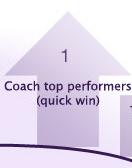
My research over the last 20 years has found that top performers demonstrate 7 key traits or characteristics (eg curiosity: eager to learn). Top performers love to be coached, to go (not think!) outside of their comfort zones. They yearn to discover what lies above and beyond their limits of success (all-be-they high already).
I see top salespeople, whom I coach, increase their sales run rates by 30%, in a matter of weeks. For those who really trust themselves and commit to the journey, performance goes up several fold.
_________________________________________________
2 Case Studies:
- Account Director (now a Vice President): Responsible for renegotiating a £50M pa contract within 9 months. The client achieved the £50M target within 11 weeks from commencement of the coaching programme.
- Regional Manager (now a Senior Vice President): used coaching methodologies to prepare his team for a new business-services sales campaign with an Australian bank. The team won a pilot worth around $100K in the UK. Our client flew to Australia to extend the bid. He then steered the local sales team to win further contracts……“I won the big one (worth £15M!) for the Australian bank I was after….. my life has changed quite a bit (for the better) and 80% due to your help”
_________________________________________________
Lever your company’s sales revenue. The top 20% of your salespeople probably bring in 80% of your revenue. Measure, if you can, the proportion, they contribute, to your profit line. I have clients who were staggered at the results.
You can now imagine what happens to your bottom line when your top performers raise their game by 30% and more. And, 0rganisational beliefs (about what’s achievable) get smashed. Others follow. But how fast? And can they keep up the pace?
So what about the remaining 80%?
Killer Strategy #2
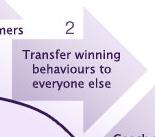 Raise Every Salesperson’s Results: model and spread your top performers’ traits and behaviours to everyone else

Sales effectiveness is a function of motivation, confidence, competence and curiosity.
Effectiveness = Motivation x Confidence x Competence x Curiosity
or…
E = MC3
(No longer a Theory of Relativity, nor rocket science, get everyone winning!)
So the objective is to raise everyone’s:
- Motivation: better yourself, seek wisdom, explore below the surface, relate to people and situations, analyse facts, follow process
- Confidence (as opposed to arrogance) know, execute: when to listen (ask), when to learn (bide time) and when to advocate (articulate)
- Competence and knowledge in 4 verbs, to: Connect, Inspire, Prove and Proceed
- Curiosity (to explore below the surface) about: selling, the customer, the customer’s industry, self, technology, your company, the world, and beyond….
This is how top performers come across and do things differently to average performers?
My personal research goes back nigh on 20 years. My studies include cross industry interviews and workshops with hundreds of salespeople, sales managers, directors, consultants and customers around the world.
My purpose here, is not to tell you how to do this. My purpose is to tell you what needs to happen.
Case Study: A pan Europe, Middle East and Africa (EMEA) survey, by a Top 5 Global IT Firm, reveals a boost in sales millions of dollars.
- UK, Regional Business Development Manager: “Sales are up because 30% more Account Managers are going out and selling solutions that otherwise wouldn’t have.
- “Middle East and Africa: Within 6 months of the launch, sales surpass $2.5M, in a region where hitherto, no Account Managers had been selling these solutions proactively.
- Q: “Score out of 10, how much has the approach contributed to the $2.5M revenue sum?”
- A: MEA Regional Business Development Manager “Contribution to sales? I’d say more than 8 out of 10.
- “Scotland: Regional Channel Partner Manager: “I started in May. The subject matter was new to me. I hadn’t been on any courses. I shared your “transfer mechanism” with our Business Partners. They were impressed. It’s now July, I’ve displaced our competitor as Business Partner of Choice and just won the first piece business, worth over $100,000,, that competitors were due to win..”
Killer Strategy #3
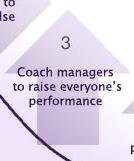 Increase the Effectiveness of Sales Leaders: Equip managers to lead others, outside their zones of comfort.
I coach managers (to coach others). Many have already been “trained in coaching”. Yet, they increase their personal productivity measurably (£).
Why?
Because, for most, “training” does not engage the manager sufficiently in the emotional and insightful journey to become a great coach:
I have found that “training” gives process.
Training alone doesn’t:
- Engage the emotional journey of moving into discomfort with a fresh mindset.
- Shift the mindset from being an expert (i.e. mentoring) to a non-expert (i.e. a co-explorer)
- Shift the mindset from being directive (eg “you need to do a,b and c!”) to non-directive.
- Nurture 7 key traits, common to both coach and a top performer.
- Get managers to realise that every coachee (at some level) mirrors their own imperfections
All the above are essential skills and learnings to coach well.
A study carried out by Olivero, Bane, & Kopeirnan in 1997 demonstrated an 88% increase in management productivity when coaching and training were interwoven as opposed to a 22.4 % increase when managers were placed on a management training programme.
Top 5 Global IT Company: European Sales Management Team, Public Sector, already “trained” as coaches.
MANAGER A:
“When I do follow the coaching process it works and it fails when I don’t”
“First two sessions were particularly useful. I would not have got through that month without the 2 List System. I am more effective in how I use my time and am more prepared for important meetings. SOS helps me synchronise with people. Using 2nd position has helped enormously. Coaching isn’t an individual session; it takes place over a period of time to get to a solution. It’s made me face some demons.”
MANAGER B:
“The Coaching Process gets an A* for managing poor performers. “
MANAGER C:
“It has helped me to explore new ideas and not get hung up if they don’t work. I took away the “Preparing for Key Meetings” from the workshop and used it – it’s brilliant. I understand the coaching tools and need to get myself organised to use them on a regular basis next year.”
MANAGER D:
“I am more rigorous in the analytical and process quadrants and it’s paid off.”
“I took the material from the workshop and applied it rigorously to coaching (underperformer) X. It’s not there yet but the mountain has moved.”
The managers achieved “Top Team” status aross Europe, in the year following the coaching.
Killer Strategy #4
 Lift Under-Achievers out of the Mire: Save them, your managers, and you, a lot of time and possibly grief!

What do you do with an underperformer?
- Sack them?
- Leave them alone?
- Manage as best you can?
- Invest in them?
Coach them. Why?
Corporate Sales Case Study: a highly rated salesperson was underachieving in her first year on quota. Within two months, from the start of the programme, the salesperson’s going rate of year-end target increased from 20% to 80%. Her results then went from strength to strength.
Quotation…. “I found the programme extremely beneficial: it grew my self-confidence and self-esteem tremendously, and allowed me to go and sell. I have both the ability and I have earned the right to do this. I also treat customers as human beings, realising that the best way to persuade someone to agree with you is to get on well with them. I am much more ruthless about agreeing to tasks outside the scope of my quota – unless it eventually benefits my quota in some way. I do nothing unless it progresses me closer towards meeting my targets. I am better respected amongst my peer group and managers, and I am assured of a successful career with solid progression!
Overall, I recommend this to anyone, so long as they are prepared to accept new ideas and alter their attitudes to certain ways of working.”
Sales Managers lose 26 days (5 weeks!) per year dealing with poor performers, source: “UK Managers Losing Twenty-six Days a Year to Poor Performers”, SHL GROUP plc, Business Series 2005.”
The UK’s “lost management days” figure is lower than the other regions studied apart from one. The UK figure is 7 days more than Sweden.
No coincidence: Sweden invests the most in getting people to competence. Source: “Getting the Edge in the New People Economy”, www.futurefoundation.net, Future Foundation and SHL Group plc.
Under-performers, when coached, take an emotional journey (similar to top performers) to step up to the next level. They rid themselves of sometimes deep-rooted, personal, blocks that hold them back. Sometimes, it only requires a simple shift: maybe just a reframe of their perspective. Mostly though, it involves something deeper.
I often find that training doesn’t go anywhere near these deep emotional blocks. Under-performers will not allow it to. They fear the consequences of exposing what holds them back, often unconsciously.
The irreplaceable value of coaching: from research undertaken (Trygve Roos, Mental Coaching 2002) to discover what really causes effective behavioural change. It proved that the most pervasive change happened when learners were trained in various excellent techniques, followed by personal coaching/interventions.
Corporate Sales Case Study: New to sales, and prior to coaching, an erstwhile consultant’s going rate was 40% of his year-end target. Within two months his going rate was 80% and he was looking to overachieve. We focused on sales campaigns to win new business in competitive accounts. He went on to win a contract from one of the campaigns worth about $1.5M, from a client whose spend up until the start of the campaign had been minimal.
Ω
Shine on…!
Paul C Burr
Follow @paulburr
7 key traits, CEOs use to break through those wretched “Corporate Firewalls”
Posted by Doctapaul in Business, Leadership on August 16, 2011
I’ve seen a wide variety of researched estimates of the average tenure of a CEO. They range from 2.5 to 7+ years. I don’t know many private investors who are that patient. The last two CEOs I met, gave themselves considerably less time to make their mark; 1 year and 6 months respectively.
CEOs seem to have a honeymoon period of around 18 months. By the end of which, if things aren’t significantly better, their ‘marriage’ with the investors will probably not last.
A chat with Professor Colin Coulson Thomas prompted me to write this blog. Colin, author of Winning Companies:Winning People, is Chairman and fellow board member of Cotoco Ltd .
Here are the warning signs that CEOs fear most.
- Bad earnings news: the most likely and quickest sign of departure.
- Corporate programs don’t deliver: mergers and acquisitions “achieve 70% of their potential” at best.
- Failure to turnaround ailing sales quick enough.
- Change takes too long: “Corporate Firewalls” prevent people from getting it done. More on this later.
- Investors don’t understand: a CEO spends 40% of their time articulating strategy and some argue that’s not enough.
- Personal wealth at risk: e.g. missed deadlines can lead to private investors swallowing up the shareholding of a company
- Lack of innovation: playing it safe is no longer an option these days. Competitors and customers are moving too quickly.
- Talent gaps in performance: e.g. 20% of the salesforce bring in 80% of the revenue (and probably a much higher percentage of the profit).
- Conflict in the boardroom: too much time spent looking inwards leaves too little time to focus on the customer.
- Personal credibility at risk: any of the above means less likelihood of stepping up the ladder of success and/or lack of a legacy of note. These in turn can lead to…
- Personal health at risk: where the stressed mind-body connection can have serious consequences. I know of one CEO who, after missing targets set by investors, developed terrible eye problems because he didn’t like what he saw. Another developed disabling back pain through a lack of self esteem. Another who was deemed too rigid and inflexible developed problems with their joints.
Getting the strategy right will largely depend on the advice the CEO receives from those around them and experts (those they know who have done it before). This is called mentorship. And many stop there because it’s traditionally acceptable to have mentors.
But the CEO’s job is not just about getting it right. It’s about influencing people who don’t want to be influenced at first. If they were easily influenceable they’d have done what was needed long ago. This leads us to those constructs that get in the way – I call them….
Corporate Firewalls
With a select group of people, the CEO works out what tomorrow’s reality for their organisation will look like – and the strategy to get there. They find the first firewall just outside this group. Everyone on the inside ‘gets it’. Those on the outside don’t – certainly not the whole picture. Which means they miss perhaps key pieces to the corporate jigsaw. The more select the CEO’s inner group, the higher or tougher the ‘wall’ is to breach.
The wall filters out some of the cognition and understanding of what went on inside. It only takes a small amount to create ambiguity. Once ambiguity kicks it can start a trail as follows:
ambiguity –> confusion –> stress –> dysfunction.
This occurs especially in organisational cultures where ‘not understanding’ is perceived as a weakness. And when a ‘senior middle manager’ (say, from outside the group) doesn’t get it, they tend to do one of 4 things. They…
- Ask for clarity (’tis surprising how little often this happens)
- Put their head down, pay lip-service, and hope it will go away
- Push back (the larger the hierarchy the less egalitarian the culture)
- (Most dangerous of all) Make up the missing pieces of the jigsaw for themselves
The latter habit creates the most confusion for everyone in the value chain right through to the customer interface or the grass roots level of the organisation. For just behind this ‘grass roots’ operational level we observe a second firewall. Curiously, those at the ‘grass roots’ level seem to get the gist of CEO messages quite easily. It’s how those messages are translated into action where the confusion lies. And they are sometimes less prone to keeping quiet when things don’t add up. So the CEO has the challenge of involving those who will carry their message wholly and articulately into the organisation on their behalf.
7 Key Traits
CEOs require a mixed repertoire of personal strategies to influence influencers. In my personal research (of several hundred top performers in organisations around the globe) I’ve observed 7 key traits (or characteristics) in those who influence the best:
- Faith-in-Self – when there is no data (or time to gather it) to make big decisions.
- Passion – if you don’t radiate passion how can you expect others to shine?
- Sensibility – to see where others are at, where they come from and where they are headed, in their minds
- Articulate – to simplify complex concepts and make them compelling
- Curiosity – to explore what’s going on below the surface of things
- Networker – it’s not what you know it’s who you go to, to find and share wisdom to get things done
- Composure – under pressure or facing the unknown
We demonstrate traits. They describe how we come across to others. We do not learn them in a classroom through conventional training. We nurture traits. A good Executive Coach accelerates the process of how a CEO nurtures winning traits and behaviours (that may feel uncomfortable at first) – to forge a strategic personal-identity with those people whom they do not have personal contact with. If these winning traits were purely intellectual or comfortable they wouldn’t need a coach – would they? With this in mind, we can see the difference between mentoring and coaching.
We get what we project.
CEOs get people to copy what they project. The onus they face: to transfer the above traits and characteristics to others. Some CEOs see coaching as something for other people with problems. They are part right. It is. But the problems I talk about are all associated with an inability to influence those people who will block/thwart even the best thought out plans. CEOs might not even know what those that hinder are up to – because they are hidden behind a Corporate Firewall.
Shine on…!
Paul C Burr
Business/Personal Performance Coach & Author
Facebook: Beowulf (>16,000 followers)
Follow @paulburr
The Fear of Fear
Posted by Doctapaul in Business, Healing, Leadership, Personal, Pitfalls I've Fallen Into, Relationships, Self Development on August 16, 2011

"Fear" by lilith_abi
Fear is a strong word. It can be an uncomfortable word. If we over-embrace fear, we end up doing nothing about it. Paradoxically the fear of fear; not talking about fear, not thinking about fear can lead to….. denial – of the conscious and unconscious fears (“let’s not go there”) that hold us back.
(Image sourced from lilith_abi.)
So it’s about creating a structure and process where we can acknowledge our fears and vulnerabilities. When we deny fear, we deny our Truth. Research shows, living our Truth is the key to creating a healthy level of self worth.
This presents a challenge to the fiefdoms in politics and business in this “winner takes all” world we’ve created. A world where one man’s vulnerabilities and mistakes are seized by another for their own gain.
It points to a new world where property, wealth and “ownership” is based on equitable negotiation and usage, not forfeiture. Where one serves all as part of our social contract. Leaders do the leading, rulers do the ruling, Kings and Queens do the king-ing or queen-ing. They are jobs with reponsibilities and accountabilities, not titles. Ah-ha – I feel a whole new blog coming on.
Ω
Shine on…!
Paul C Burr
Follow @paulburr

Share this page


How to Be a Friend of the Devil Within

Available from Amazon and major bookstores:
Quick Guide VII – A Top-notch, Sales-Relationships, Account Management Template

Available from Amazon and major bookstores:
Quick Guide VI – How to Sell Coaching

Available from Amazon and major bookstores:
For The Love of Lilith & How to Put Love into Practice (and Non-attach Yourself to It)

Available from Amazon and major bookstores:
Quick Guide V – How to Apply Mindfulness to Business Relationships

Available from Amazon and major bookstores:
The Mystique to the Game of Life (and Unrequited Love)

Available from Amazon and major bookstores:
Quick Guide IV – A Scorecard that Accounts for Mindfulness in Business

Available from Amazon and major bookstores:
Quick Guide III – How to Bridge the Pillars of Successful Business Relationships

Available from Amazon and major bookstores:
Quick Guide II: How to Spot, Mimic and Become a Top Salesperson

Available from Amazon and major bookstores:
Quick Guide: How Top Salespeople Sell
Available from Amazon and major bookstores:
Defrag your Soul

2012: a twist in the tail

Available from Amazon and major bookstores:
Learn to Love and Be Loved in Return

Available in USA and UK, in paperback and Kindle format
 ,
, 
 ,
,  &
& 
 &
& 
 ,
,
 &
&
 also
also
 ,
,  also
also
 ,
, also
also
 ,
, 


 Paul C Burr